
18 September 2026
Kitchen Fitters in Crosby, Waterloo and Blundellsands: Costs and the Local Housing Stock
Four neighbourhoods, one road, and a spread of housing that makes a nonsense of any single price for a kitchen. Blundellsands was laid out from 1868 onwards as a suburb for Liverpool’s merchant class, and the villas built there over the following forty years came with kitchens, sculleries and cellar heads sized for a household that employed staff. Waterloo, closer to the shore, is tighter terraced streets. Inland you pick up the interwar semis, and behind Crosby village the postwar estates begin. All of it has been part of the Metropolitan Borough of Sefton since 1974, which changes the paperwork on a kitchen more than most people realise, and two of Sefton’s 25 conservation areas sit on this strip. A quote for a Waterloo terrace and a quote for a Blundellsands villa can be £20,000 apart with nobody overcharging anyone. This is why.
What a New Kitchen Costs Along the Crosby Strip
Ranges, before anyone gets attached to a showroom display. A like-for-like replacement in a Waterloo terrace or a smaller Crosby semi lands between £6,000 and £11,000 supply and fit. A mid-range job in an interwar semi, with a layout change and new flooring, runs £11,000 to £20,000. The big rooms at the seaward end of Blundellsands and Brighton-le-Sands start around £20,000 and go past £38,000 without anyone being extravagant about it.
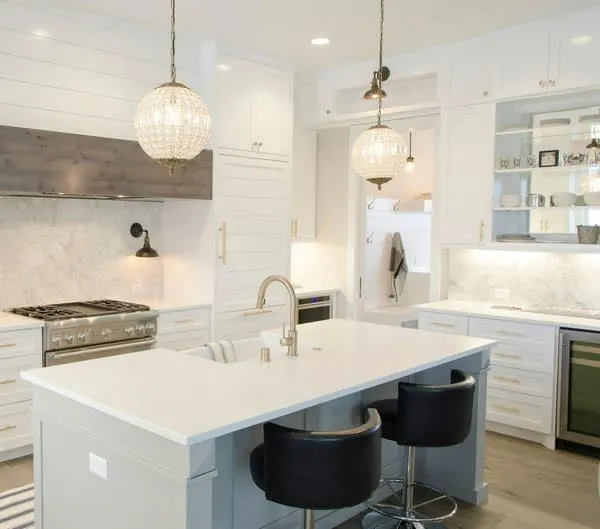
Nothing mysterious is happening there. A terrace back kitchen might take 5 metres of unit run. A villa kitchen with the old scullery wall gone can take 11 or 12, plus an island, plus a tall bank of larder units. Worktop is sold by the metre and cabinets by the unit, and labour scales with both. Fitting alone typically sits between £2,800 and £5,500 across this area depending on how much pipework and cable has to move.
Which is why we price kitchen installation off a site visit rather than a floor plan. The distance between a retail drawing based on a homeowner’s tape measurements and what genuinely fits into a 130-year-old room is where most of the overspend on this strip comes from.
Blundellsands and Brighton-le-Sands: Big Rooms, Sculleries and Cellar Heads
The villas here were designed around a division of labour nobody lives by any more. You typically find a main kitchen, a separate scullery or wash house off it, a pantry with a stone shelf on the coolest wall, and a door to the cellar steps somewhere in the middle of all of it. Open that up and you get a genuinely large room. You also get four decisions most homeowners have not thought about.
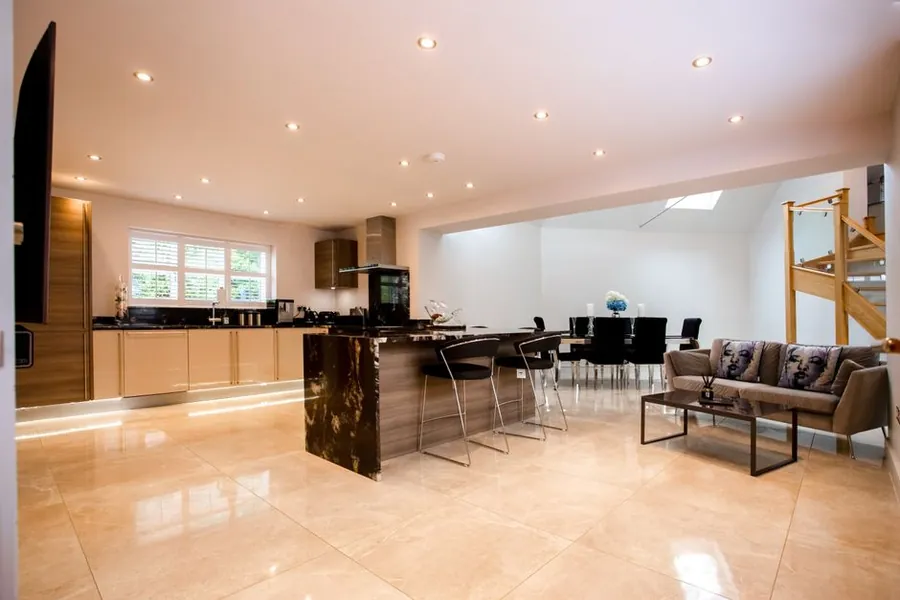
The cellar head is the awkward one. Those stairs come up somewhere, and the doorway at the top is often exactly where you would want a run of base units. Boxing it in, moving the opening, or dropping in a flush floor hatch are all possible. Only one of those is cheap, and it is usually not the one people want. Settle it at design stage, because it moves the layout rather than just the finish.
Then the floor. Suspended timber over a ventilated cellar is normal in these houses, and a 30mm quartz top on a 3-metre island is a serious point load. Joists want checking, and occasionally doubling, before stone gets ordered. Ceiling heights of 3 metres and over are the other quiet cost: standard 720mm wall units look stranded up there, so these jobs usually end up with stacked or bespoke-height uppers. More storage, more money.
The Waterloo Terraces, and Why Access Ends Up on the Quote
Closer to the shore at Waterloo the grain tightens. The terraces off the main roads are narrower, the rear kitchen is often a single-storey back addition, and the streets have cars along both kerbs with no off-street loading anywhere near the front door.

That sounds like a footnote and it is not. A full kitchen turns up on a curtain-sider that needs somewhere to stop, and a 3-metre stone worktop needs four people and a clear run from the kerb to the room. The realistic options on streets like these are an early delivery slot, a permit that doubles as held kerb space, or splitting the delivery across two days. Anyone who has worked Waterloo raises it without being asked. If access never comes up while you are being quoted, the job has not been thought through.
The rooms themselves take well to being opened up, and it is the most common request we get in this stock by a distance. That is its own project, with an engineer, a steel and an inspection attached. Our guide to knocking through in a terrace kitchen and dining room breaks down what each stage costs, and the sequencing in it holds here as much as in the city.
Interwar Semis and the Postwar Estates Behind Crosby
Between the shore and Crosby village the housing turns mostly interwar: bay-fronted semis, decent plot widths, solid floors, and walls close enough to square that scribing takes minutes rather than an afternoon. These are the easiest kitchens on the strip to fit and the most predictable to price.

Their limitation is the original layout. A 1930s kitchen was a working room of roughly 3m by 2.5m with a larder, a back door, and often an outside toilet bolted onto the end. Almost every project here involves borrowing space from the dining room or the old rear porch. The wall between those two rooms in a semi of this age is non load-bearing more often than the equivalent wall in a Victorian terrace, so the opening is sometimes a much smaller job than people fear.
The postwar estates behind the village read differently again. Concrete floors, which are excellent under stone and expensive if they need levelling. Smaller windows, so the lighting design has real work to do. And original electrics that never anticipated the number of appliances a kitchen would eventually hold, which puts a consumer unit upgrade on the quote alongside the kitchen.
Salt Air: What Coastal Exposure Actually Damages
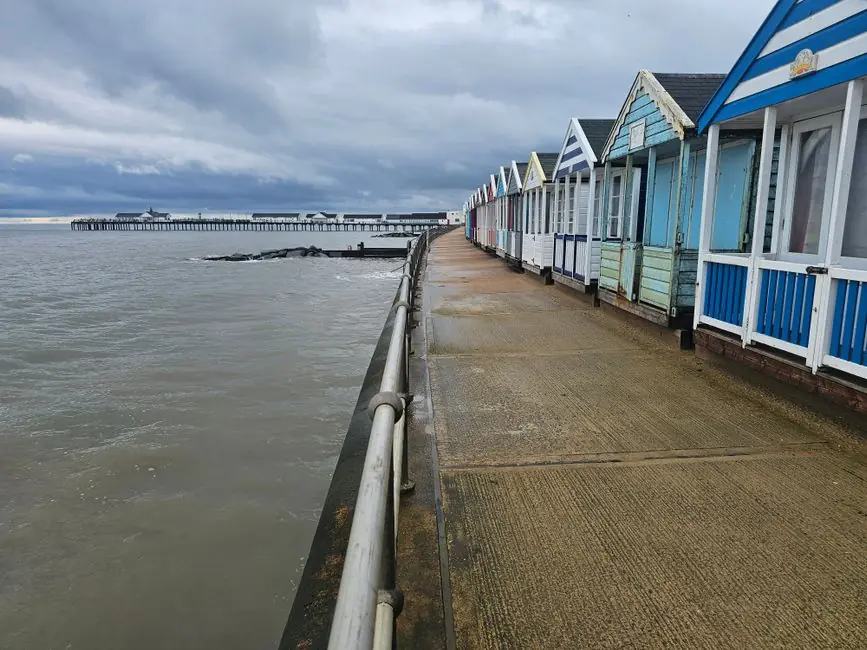
The prevailing wind comes in off Liverpool Bay carrying salt, and on the seaward streets of Blundellsands and Brighton-le-Sands it is on the building all year. It does not go after your cabinet doors, which sit in a heated room behind glass. It goes after anything metal sitting in the airflow.
Extractor terminations are the usual casualty. A cheap aluminium cowl on an exposed gable goes chalky and stiff inside three or four years, and a seized backdraught shutter is the difference between a hood that clears the room and one that only makes noise. Specify stainless or powder-coated, and keep the duct as short and as straight as the building allows, because a long horizontal run holds damp air overnight. The rates you have to hit are set out in Approved Document F of the building regulations, and a recirculating hood will not meet them - which matters anywhere, and matters more in a house this exposed.
The same logic covers a new back door or a replacement kitchen window on a seaward elevation. Handles, hinges and trickle vents fail long before the frame does, and upgrading them at the point of installation costs almost nothing next to replacing a swollen door in five years.
Your Building Control Body Is Sefton, Not Liverpool
This one catches people out constantly, particularly anyone who has moved out of the city. Crosby, Waterloo, Brighton-le-Sands and Blundellsands are in Sefton, and have been since the Municipal Borough of Crosby was folded into the new metropolitan borough in 1974. A Liverpool postal address does not put you in Liverpool City Council’s area.

On a kitchen the notifiable items are a short list: new or altered circuits, which a Part P registered electrician can certify themselves; gas work, which needs a Gas Safe engineer; new ventilation; and anything structural, which cannot be self-certified at all. The structural side goes to Sefton Council’s building control service, as a full plans application or a building notice, or to a private registered building control approver if you would rather.
Conservation areas are worth two minutes of your own time. Sefton has 25 of them, Blundellsands and Waterloo Park included, with appraisals published on the council’s conservation areas pages. Internal kitchen work is rarely affected. A vent or flue appearing on a street-facing elevation can be, and a listed building needs consent for internal alterations regardless. Checking your postcode is free. The argument afterwards is not.
Soft Water, and What It Changes About Taps and Appliances
One thing this area gets for nothing. The supply across Merseyside comes off upland reservoirs rather than through chalk, so it arrives with very little calcium in it. No furred kettle element, no crust round the tap aerator, no scale creeping through the dishwasher.
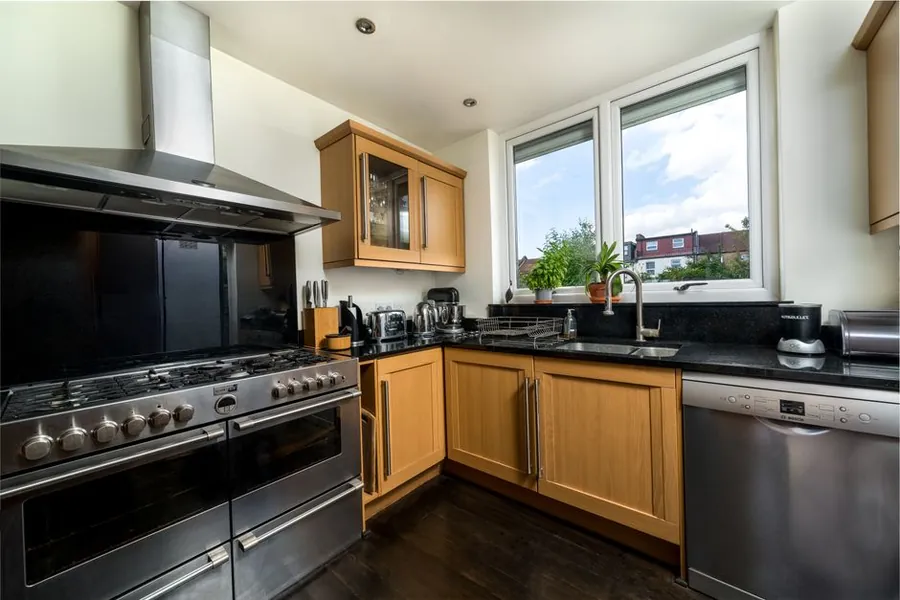
Practically, that means you can ignore most of the appliance advice online, because it is written for Kent and Hertfordshire. Skip the softener entirely. Spend the saving on a tap with a replaceable cartridge and a sink you actually like, and turn the dishwasher’s hardness setting right down. The detail on sinks, tap finishes and machine settings is in our piece on what Liverpool’s soft water changes about your kitchen, and it applies the same way north of the city boundary.
There is one thing to look at while the floor is up. Some of the older houses on this strip still have their original incoming supply pipe under the front path, and a kitchen strip-out is the only time it will ever be easy to get at. Ask your fitter to check it before the new floor goes down.
Choosing Someone to Do the Work
Three quotes, priced against the same brief, still beats every other bit of research you can do. Ask for each one broken down far enough that you can see the strip-out, the services, the units, the tops, the plastering and the skip as separate figures. A quote that comes in well under the others has usually left one of those out, and you will pay for it later anyway.
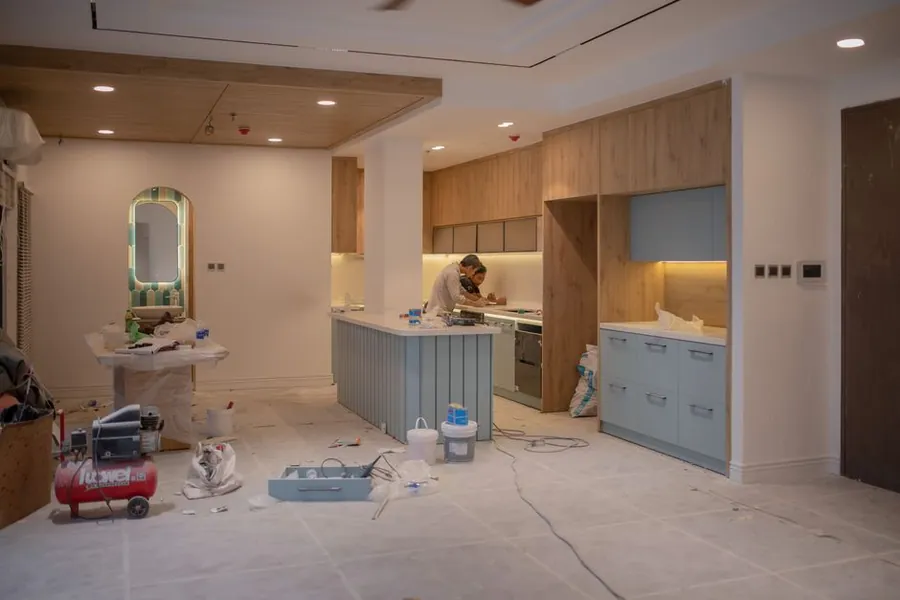
After that, ignore the sales pitch and look at the evidence. Ask for two or three customers within a few miles you can actually telephone. Ask to see the public liability certificate rather than taking the figure off a website. Get the electrician’s Part P registration and the gas engineer’s Gas Safe number named on paper, not implied. Trade directories such as the Federation of Master Builders’ find a builder search are a fair first filter, though on this strip a neighbour’s recommendation tends to be worth more than any database.
Two notes on timing. Order dates, not fitting dates, are what slip: units commonly take a few weeks to arrive and templated stone adds another week or two after the cabinets are in, so the diary needs building backwards from the worktop, not forwards from the strip-out. And leave a slice of the budget untouched until the old kitchen is out, because in Victorian and Edwardian rooms something is always hiding behind the units. Along here it is usually a floor, a soil pipe in an inconvenient place, or a cellar head nobody had measured.
Want to talk through a kitchen in Crosby, Waterloo or Blundellsands? Get in touch here.
Frequently Asked Questions
How much does a new kitchen cost in Crosby or Blundellsands?
Budget on £6,000 to £11,000 for a straightforward replacement in a Waterloo terrace or a smaller Crosby semi, £11,000 to £20,000 for a mid-range kitchen in an interwar semi or a postwar detached, and £20,000 to £38,000 upwards for the large rooms in a Blundellsands or Brighton-le-Sands villa. Room size is the biggest single variable, and the villas at the seaward end of the strip routinely hold twice the run length of a terrace kitchen.
Which council deals with building control for a Crosby kitchen?
Sefton Council. Crosby, Waterloo, Brighton-le-Sands and Blundellsands have all sat inside the Metropolitan Borough of Sefton since 1974, so anything notifiable goes to Sefton’s building control team rather than Liverpool City Council. The national regulations are identical either way, but the application, the inspections and the completion certificate come from a different office, and picking the wrong one costs you weeks.
Does living near the seafront at Blundellsands affect a kitchen fit?
It affects the parts of the job exposed to outside air rather than the cabinets themselves. Salt-laden wind shortens the life of external vent grilles, door and window ironmongery and any bare or lightly coated steel. Ask for a stainless or powder-coated cowl on the extractor outlet instead of a plain aluminium one, and keep the duct run short so damp air is not sitting in a long horizontal length overnight.
Is my street in a conservation area, and does that matter for a kitchen?
It might be. Sefton has 25 declared conservation areas and both Blundellsands and Waterloo Park are among them, so check your address on Sefton’s conservation and heritage pages before anyone drills. Internal kitchen work is rarely caught. A new vent or flue appearing on a front or side elevation can be, and if the house is listed then internal alterations need listed building consent whatever the planning position is.
Do I need a water softener in Crosby or Waterloo?
No. The supply across this part of Merseyside comes off upland reservoirs and reaches the tap with very little calcium in it, so there is nothing for a softener to remove. Put the money into a better tap cartridge and a decent sink instead, and turn your dishwasher down to its lowest hardness setting.