
2 September 2026
Liverpool's Soft Water: What It Changes About Your Sink, Tap and Kitchen Appliances
Ask anyone who has moved to Liverpool from Kent or Essex what surprised them about the house, and a fair number will mention the kettle. Descaler stops being a shopping list item. Shower screens stop growing a white film. That is not the kettle being kinder, it is the water: Liverpool has been drinking off the Welsh hills since 1892, when the Vyrnwy aqueduct started carrying supply 110km east into the city, and upland water arrives with very little calcium in it. Most Liverpool postcodes test somewhere between roughly 70 and 120 mg/l of calcium carbonate, against 250 mg/l or more across much of the south east. It sounds like a footnote. It is not, because half the advice about kitchen sinks, taps and dishwashers online is written for hard water areas, and following it here costs money and occasionally ruins glassware.
Where Liverpool’s Water Comes From, and Why the Kitchen Notices
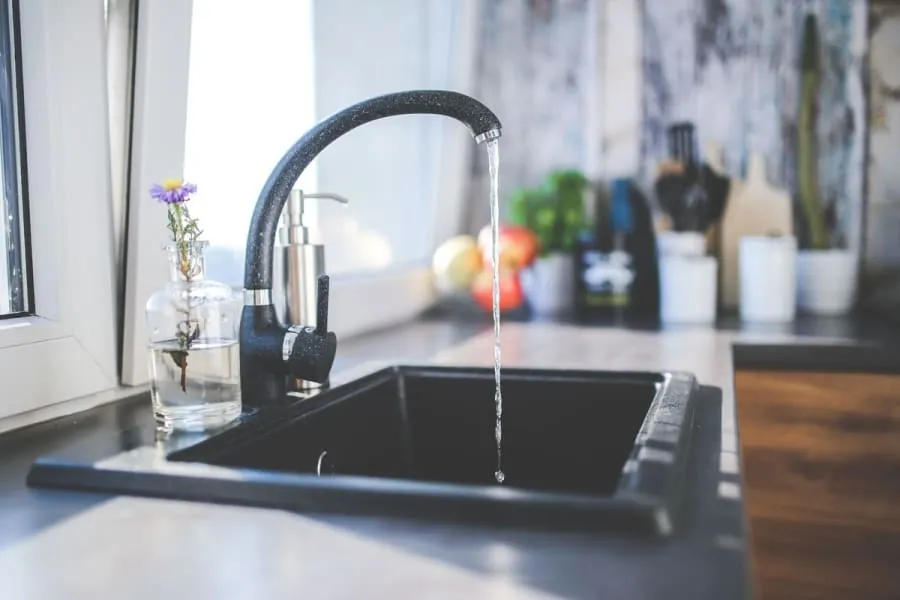
Hardness comes from water passing over chalk and limestone and dissolving calcium and magnesium on the way. Liverpool’s does very little of that. The bulk of the city’s supply falls as rain onto moorland and mid Wales catchments, sits in reservoirs on impermeable ground, and travels in pipes rather than through rock.
United Utilities classifies anything from 0 to 50 mg/l as soft, 51 to 100 as moderately soft, and 101 to 150 as slightly hard, according to United Utilities’ published water hardness factsheet. Liverpool sits across the middle two bands, and the number shifts a little depending on which reservoir is feeding your area on a given week.
What that buys you in a kitchen is real. No crust on the kettle element. Taps that keep their finish instead of getting pitted around the aerator. Boilers and dishwashers that are not slowly furring up inside. When we plan a kitchen installation in the city, scale protection is one of the very few problems we do not have to design around, and that frees up budget for things that do wear out.
Soft Water Is Kind to Appliances and Less Kind to Old Pipework
There is one genuine trade off, and it is worth knowing before you sign off a kitchen. Hard water leaves a thin scale layer inside pipes, which is a nuisance in an appliance but acts as a lining. Soft water leaves nothing, and it is marginally more willing to pick up metal from whatever it is running through. United Utilities’ own guidance notes that water at around 100 mg/l or below can be more corrosive to pipework than harder supplies.
For anything installed in the last forty years this is a non issue. Copper and plastic are fine. Where it matters is the pre-1919 terraced stock that makes up an enormous share of Liverpool’s housing, from Kensington and Anfield through to the Dingle, where an original lead supply pipe can still be running in from the street under the front path.
If you are ripping a kitchen out anyway, that is the moment to look. The floor is up, the units are gone, and swapping a lead incoming main for MDPE is a fraction of the cost it would be as a standalone job later.
Nobody plans for it and almost nobody regrets it. The Drinking Water Inspectorate, which regulates public water quality in England and Wales, publishes guidance on identifying and replacing lead supply pipes. It is a ten minute check while the kitchen is open, and most people never think to do it.
Choosing a Sink When Limescale Is Not the Enemy
Sink advice written for a hard water county is mostly about hiding scale. That is why it steers people towards textured stainless steel, which disguises white deposits, and away from anything dark or flat that shows them. In Liverpool that constraint largely disappears, and the shortlist opens up. Composite granite sinks in dark grey and black, which are a maintenance headache in Reading, behave themselves here because there is very little in the water to leave a bloom. Smooth brushed stainless is fine rather than a mistake. Fireclay butlers, popular in the city’s period properties, do not develop the tidemark they get in hard water areas.
What you should judge a sink on instead is how it takes abuse: gauge of steel, whether the underside is sound deadened, how the corner radii clean out, and whether the bowl is deep enough for an oven shelf. Those are the things people complain about at year three, not water spots.
Tap Finishes: What Actually Wears Here
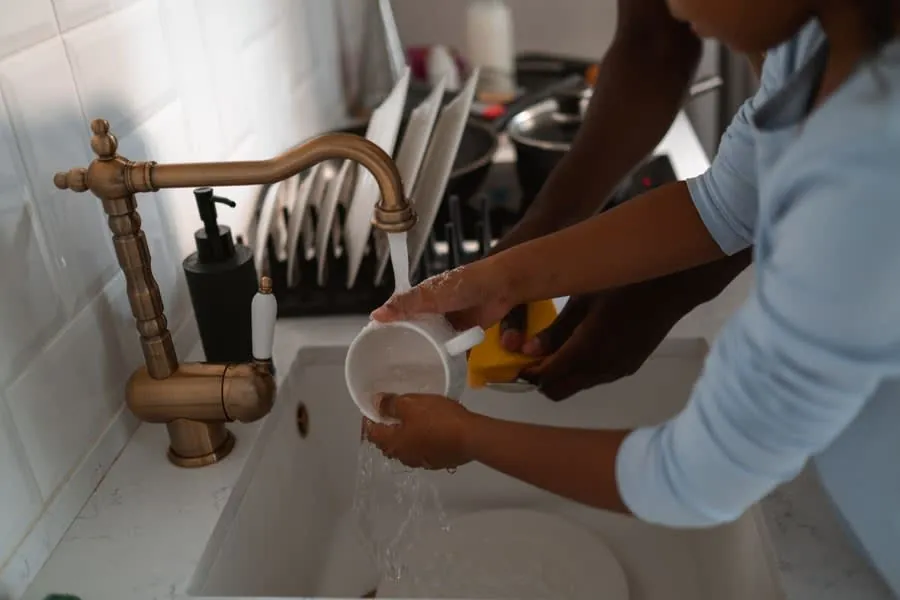
Brushed brass, matt black and gunmetal have been the fashionable finishes for a few years, and in hard water areas they are a gamble, because the acidic descalers people reach for weekly are exactly what strips a PVD or powder coated finish. Take the descaling away and the gamble mostly goes with it.
That is the argument for being braver with tap choice in a Liverpool kitchen than you might be elsewhere. The finishes fail through chemical attack far more often than through wear, and here there is very little reason to be attacking them.
Two things still matter. Buy a tap with a serviceable cartridge from a brand that will still be selling spares in eight years, because that is what actually ends a tap’s life. And if the tap is going in a new position, price the pipework properly at quote stage rather than at fitting stage, which is covered in more detail in our guide to the cost of moving a sink, hob or boiler.
Dishwashers: The Settings Nearly Everyone Gets Wrong
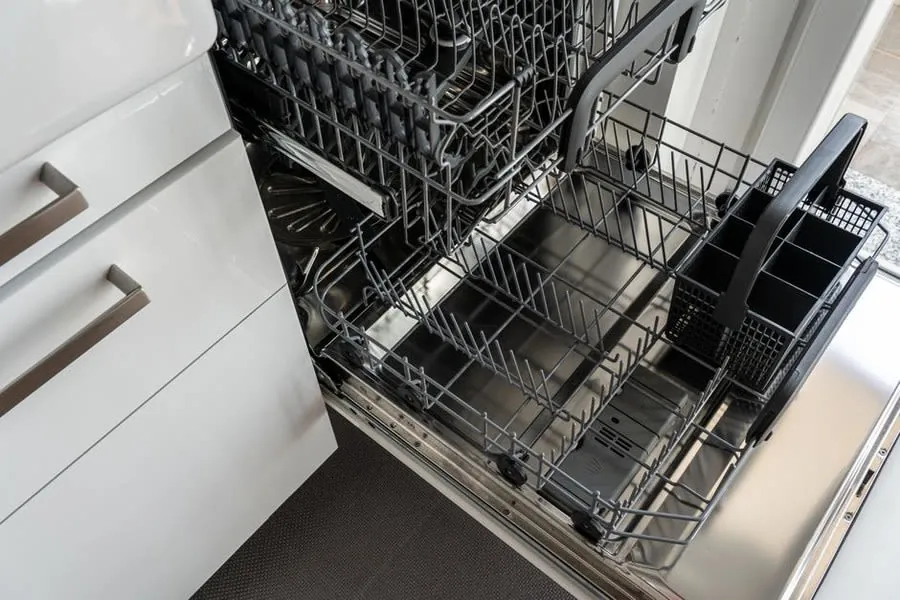
Every dishwasher has an internal water softener and a hardness setting, and it ships set for average national water, not Liverpool’s. Left alone it regenerates more often than it needs to, which means you buy salt you did not need and the machine runs a cycle it did not need.
Find the hardness setting in the manual, set it at or near the bottom of the range, and your salt consumption drops sharply. Some machines allow the softener to be switched off completely at the lowest hardness levels. Check the specific manual rather than assuming.
Then cut the detergent. This is the part that catches people out, because cloudy glassware in Liverpool is usually not scale at all, it is etching. Soft water, a generous detergent tablet and a hot programme will slowly attack the glass surface itself, and once that has happened no rinse aid or vinegar cycle brings it back.
So the diagnosis is easy. If your glasses are going milky and wiping them does nothing, you are looking at etched glass, and the answer is a lower dose and a cooler cycle from here on.
Kettles, Filter Jugs and Boiling Water Taps
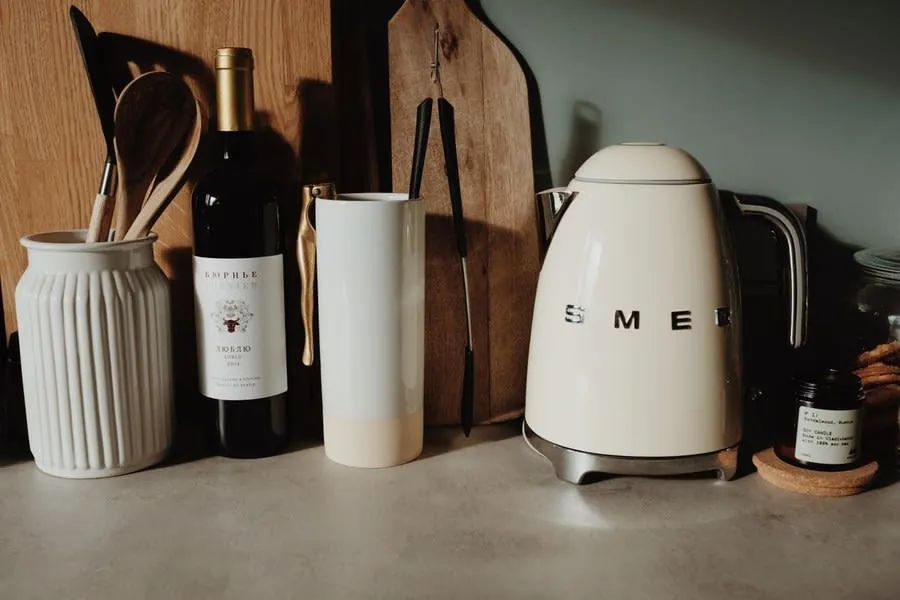
Boiling water taps are the fastest growing request on Liverpool kitchen jobs, and the soft supply genuinely helps their case. The usual killer of a boiling tap in a hard water area is scale building in the tank and the heating element, which shortens its life and pushes up servicing. That risk drops a long way here. It does not disappear entirely, and the filter cartridge still needs changing on the manufacturer’s schedule, typically every six to twelve months depending on household use. The cartridge is doing a taste and particulate job as much as a scale job.
Filter jugs are a different conversation. People buy them expecting to fix hardness, then find the water tasted fine to begin with. If you are filtering in Liverpool, you are usually chasing chlorine taste rather than minerals, and a jug or an undersink carbon filter handles that at a fraction of the cost of anything plumbed and heated.
So Do You Need a Softener? Almost Certainly Not
Softener companies sell nationally and their marketing does not stop at the county line, so Liverpool homeowners get pitched a product built for a problem they do not have. A unit is typically £900 to £2,000 fitted, plus salt, plus servicing, and it takes up the base unit next to the sink that you were going to use for bins.
United Utilities does not artificially soften any supply in the north west, and it does not need to. If someone quotes you for one, ask them what your postcode’s hardness reading actually is before you go any further.
In the rare cases where one is justified, the rules are not optional. A softener has to be installed after the drinking water tap, so there is always an unsoftened supply for drinking and cooking, and the installation has to comply with the Water Supply (Water Fittings) Regulations 1999. Any fitter who shrugs at that detail is not the person to let near your incoming main.
Frequently Asked Questions
Is Liverpool’s tap water hard or soft?
Soft to slightly hard, depending on the postcode. Most of the city is fed from Lake Vyrnwy in mid Wales and from Pennine and Lake District reservoirs, all upland sources that pick up very little calcium on the way. Readings across Liverpool postcodes typically land somewhere between about 70 and 120 mg/l of calcium carbonate, which sits in United Utilities’ moderately soft and slightly hard bands. For comparison, much of the south east runs above 250 mg/l. You can check your own postcode on the United Utilities water quality pages.
Do I need a water softener in a Liverpool kitchen?
Almost never. Softeners exist to strip calcium out of hard water, and Liverpool’s supply arrives with very little in it to remove. Spending £900 to £2,000 plus salt and servicing on a softener here buys you almost nothing that the water is not already doing. The exceptions are rare: a specific appliance manufacturer requiring it, or a private supply. If one is fitted, it must be plumbed after the drinking water tap and comply with the Water Supply (Water Fittings) Regulations 1999.
Why does my dishwasher leave my glasses cloudy if the water is soft?
Because it is usually etching, not limescale. Soft water plus a heavy detergent dose plus a hot cycle slowly attacks the glass surface, and unlike a scale film it will not wipe off or wash away with a rinse aid. Set the machine’s water hardness to the lowest setting it offers, cut the detergent dose, and drop to a cooler programme for glassware. Once glass is etched it is permanent, so the fix is preventing it on the next load.
Does soft water damage kitchen pipework?
It does not damage modern copper or plastic pipe, but soft water is slightly more likely to dissolve metals from old pipework than hard water is, because there is no scale layer lining the inside. In practice that matters most in Liverpool’s pre-1919 terraces, where an original lead supply pipe may still run in from the street. If a kitchen is being stripped back anyway, that is the cheapest moment in the next thirty years to replace it.