
3 November 2026
Paying For A New Kitchen In Liverpool: Deposits, Stage Payments And Finance
Paying for a new kitchen in Liverpool usually means handing over more money than anything else you’ll buy for the house, short of the house itself, and most of it goes before you can boil a kettle in the new room. That’s what makes the payment side worth planning. On a typical supply and fit job the fitter orders units, worktops and appliances weeks before the first cupboard comes off your wall, and that stock has to be paid for. You, meanwhile, want proof the work is happening before the next payment leaves your account. This guide is about the how and the when: what a fair deposit looks like, how to tie stage payments to things you can see, whether finance or a remortgage makes sense, and which card payments give you protection if a firm folds halfway through.
How Paying For A New Kitchen In Liverpool Usually Works
Most fitted kitchens are paid for in three to five instalments. One goes on signing, one or two land as the materials arrive and the fitting progresses, and a final one follows sign-off. The exact split depends on who buys the kitchen. When we handle a kitchen installation in Liverpool on a supply and fit basis, the largest outlay is the units and worktops, so that’s what the early money pays for.
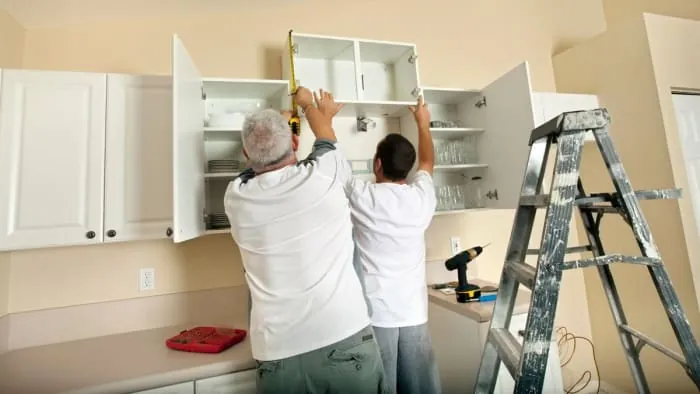
The shape of the schedule is more important than the exact percentages. Money should follow the job, never get ahead of it. If you can stand in the room and see that each payment matches something that’s been delivered, fitted or finished, the arrangement is sound. If you’re being asked for money against things that are “on order” with nothing to show for them, ask why.
Liverpool fitters are busy, and the good ones are often booked several weeks ahead, so you’ll sometimes be asked for a deposit to hold a start date as well. That’s reasonable as long as the amount is modest and the contract says what happens to it if either side pulls out.
What A Fair Kitchen Deposit Looks Like
A deposit on a supply and fit kitchen exists to cover the stock being ordered in your name. Cabinets, doors, worktops and integrated appliances are bought before fitting starts, and much of it is made or cut to order, so a firm can’t easily return it if you change your mind. A deposit somewhere between a quarter and a third of the total is common for that reason, sometimes a little more where expensive appliances or a stone worktop are part of the order.

What to check before you pay it:
- The deposit amount and what it pays for are written in the contract, not just mentioned in a text message.
- The name on the bank account or card receipt matches the business you are contracting with.
- The contract says whether the deposit is refundable, and in what circumstances.
- If you signed at home, you’ll normally have 14 days to cancel under the consumer contract rules, though made-to-measure items ordered at your request may not be refundable once they’re in production.
Pay by credit card where you can, even if you then clear the card balance straight away. We explain why further down, and it’s the single cheapest piece of protection available to you.
Stage Payments Tied To Milestones You Can See
The best stage payment plan is built around moments you can check with your own eyes. Here is an example schedule for a £14,000 supply and fit kitchen. Treat it as an illustration of the principle, not a rule every firm follows.

- On signing, 30 per cent (£4,200). This pays for the units, doors and worktops being ordered.
- Units delivered and checked, 25 per cent (£3,500). Paid once the boxes are on site and you’ve counted them against the plan.
- Carcasses fitted and worktops templated, 25 per cent (£3,500). Base and wall units are fixed, level and in position, and the worktop has been measured for cutting.
- Worktops in and appliances working, 10 per cent (£1,400). You can cook in it.
- After snagging, the last 10 per cent (£1,400). Doors adjusted, sealant done, any small faults put right.
Worktop templating deserves a mention of its own. Quartz, granite and solid surface tops can’t be measured until the base units are fixed and level, because the template is taken from the real cabinets, not the drawing. Fabrication then usually takes a week or two. That’s why the worktop money belongs at or after templating, not on day one.
On a terraced house without a garage or dry outbuilding, units often arrive stacked in the front room or the hall. That’s the moment to open a few boxes and check the doors for damage before the delivery payment goes. Don’t let cartons sit in a back yard or a damp outhouse through a Merseyside winter either. Chipboard that has drunk rainwater swells at the edges, and nobody wants to argue later about whose fault that was.
Extras are part of stage payments too. Pull the old kitchen out of a Victorian back kitchen in Walton or Kensington and you may find soft joists under the lino or a wall that needs replastering. A good fitter stops, shows you, and prices it in writing before carrying on. The extra then goes into the next stage payment, not handed over in cash on the day.
Supply Only Or Fitted: Who You Pay And When
Buying the kitchen yourself changes the payment pattern completely. Most showrooms and DIY retailers want a deposit when you order and the balance before delivery. By the time a fitter arrives, the kitchen is fully paid for, and any protection on that money comes from how you paid the retailer.

The fitter is then paid only for labour. Because they’re not buying stock on your behalf, there’s little reason for a large deposit. A small booking fee, or the cost of sundries like sealant, fixings and edging, is about as far as it should go. Labour for a fit-only job is commonly paid in stages as the work goes in, or in full when it’s finished.
The catch is that you now hold two or three separate agreements, and if a unit arrives damaged, the retailer and fitter can each point at the other. We go through when buying your own kitchen saves money and when it just shifts the risk onto you in our supply only versus supply and fit guide.
Retail Finance, Savings Or A Remortgage
Savings are the cheapest way to pay because they don’t cost interest, though they do cost whatever the money would have earned in the bank. Most people funding a kitchen without savings choose between three options.
Retail finance through the kitchen company
Many showrooms offer interest-free or low-rate credit over one to five years. It can be good value if you clear it inside the 0% period. Read what the rate becomes after that, whether there’s a deposit, and what happens if one payment is late. Anyone arranging consumer credit has to be authorised, and you can check a firm or broker on the FCA’s Financial Services Register before you sign. You normally have 14 days to withdraw from a regulated credit agreement after signing.
A personal loan
You borrow a fixed amount, pay the fitter as the stages fall due, and repay the bank over a set term. It keeps the kitchen and the borrowing separate, which some people prefer.
A remortgage or further advance
Mortgage rates are usually lower than loan rates, but the term is much longer. Spreading £10,000 over the twenty or so years left on a mortgage can cost more in total interest than a five-year loan at a higher rate. Arrangement fees and any early repayment charge on your current deal also count. It suits a large project better than a straight refit.
We’re kitchen fitters, not financial advisers, so the right answer depends on your own numbers. What we can say is that the payment schedule above works the same whichever way the money is raised.
Protecting Your Money: Section 75 And Insurance-Backed Guarantees
Section 75 of the Consumer Credit Act is why the credit card matters. If any part of the price goes on a credit card, and the cash price of what you’re buying is over £100 and no more than £30,000, the card company is jointly liable with the trader. Pay a £3,000 deposit on a card for a £12,000 kitchen, and if the firm goes under before delivering, you can claim from the card provider. Citizens Advice explains Section 75 and chargeback claims, including the rule that you usually need to have paid the trader directly.

A few practical points:
- Paying through PayPal or another intermediary can break the link Section 75 relies on.
- Debit cards don’t carry Section 75 cover. You can ask your bank for a chargeback, but that is a voluntary scheme with time limits and no guarantee.
- Point-of-sale finance arranged by the trader usually gives you the same joint liability as a credit card.
- Cash and bank transfers have no built-in protection at all.
Guarantees are the other half. A workmanship guarantee is only as good as the business behind it. An insurance-backed guarantee means an insurer honours the guarantee if the firm stops trading during its term. Deposit protection insurance does a similar job for money paid before the work is done. If a firm offers either, ask who the insurer is and get the policy document, not just a logo on the quote.
What You Should Never Pay Upfront
A few requests should make you pause, however friendly the person asking. We’d say no to all of these:

- The whole price before anything is ordered. There’s no stock reason for it, and if the job never starts you’re left with nothing.
- Labour for work that hasn’t happened yet. Fitting gets paid for as it goes in.
- The full worktop price before templating, unless the supplier insists and you can see their invoice.
- The final instalment before snagging. Once that’s paid, small faults have a way of sliding down the to-do list.
And be wary of anyone offering a discount for cash today. You lose your paper trail, and the offer nearly always comes with a push to decide on the spot.
Bank detail fraud is the other thing to watch. If you get an email saying the fitter’s account has changed, phone them on a number you already have before you send a penny. Emails are easy to fake, and kitchen stage payments are exactly the size of payment fraudsters go after.
If something does go wrong, the government’s consumer protection guidance directs you to the Citizens Advice consumer helpline, which can pass complaints to Trading Standards. For most readers that is Liverpool City Council, or Wirral, Sefton or Knowsley depending on which side of the boundary you live. For comparing what the quotes themselves include, see our guide to comparing kitchen fitting quotes in Liverpool.
Frequently Asked Questions

Is it normal to pay a deposit for a new kitchen?
Yes, on a supply and fit job. The fitter is ordering units, worktops and appliances with their own money before they start, and the deposit covers that. What it shouldn’t do is go far beyond the cost of the materials being ordered. On a fit-only job, where you have bought the kitchen yourself, there is much less for the fitter to buy, so any deposit should be small - a booking fee or the cost of sundries, not a big slice of the labour.
Can I pay a kitchen deposit on a credit card?
You can if the trader takes cards, and it is usually the smartest way to pay it. Under Section 75 of the Consumer Credit Act, if any part of the price goes on a credit card and the cash price of what you are buying is over £100 and no more than £30,000, the card provider shares responsibility with the trader. That means you can claim the full amount from the card company if the firm goes bust or fails to deliver, even if only the deposit was paid by card. Pay the trader directly rather than through a third party such as PayPal, or you may lose that protection.
Should I use 0% finance or remortgage to pay for a kitchen?
It depends on how long you need to borrow for. Interest-free retail finance can cost nothing if you clear it inside the offer period, but check the APR that applies afterwards and what happens if you miss a payment. Adding the kitchen to your mortgage usually gives a lower rate, but spreading a few thousand pounds over twenty-odd years can mean paying far more interest overall, plus any arrangement fees or early repayment charges. Savings remain the cheapest money for most people. For anything you are unsure about, MoneyHelper or an independent adviser can look at your own figures.
When should the final payment for a kitchen be made?
After the job is genuinely finished and you have walked round it with the fitter. That means worktops fitted and sealed, appliances working, doors and drawers adjusted, and any snags either fixed or written down with a date. Holding back a final stage of around ten per cent until then is fair to both sides and gives everyone a reason to finish properly.
Want a quote with the payment stages set out in writing from the start? Tell us about the room and we’ll come and measure up. Get a free kitchen quote in Liverpool.