
24 August 2026
Supply Only or Supply and Fit? Buying Your Own Kitchen in Liverpool
There is a particular conversation that happens in Liverpool kitchens about three weeks into a project, usually while somebody is standing in a hallway full of cardboard. The homeowner bought the units themselves to save money. Two doors turned up in the wrong finish, the corner post is missing, and the fitter is booked on another job on Monday. Nobody did anything stupid - the plan just had a gap in it that only showed up when the boxes were opened. Around a third of the kitchen enquiries we take in the city start with units the customer has already bought or is about to, and it can be a genuinely good decision. It can also quietly cost more than paying one company to handle the lot. The difference between the two routes is not really about price. It is about who is holding the problem when something goes wrong, and the labour figures below are the ones Liverpool fitters are actually working to.
The Three Options, Not Two

People talk about this as a two-way choice, and it is really a three-way one. Supply and fit means one company sells you the kitchen and installs it, and there is a single contract covering both. Supply only, or labour only, means you buy the kitchen wherever you like and pay a fitter for the work alone. The third route sits between them and gets used more than either in this city: you choose the kitchen at a showroom or a trade depot, and the fitter orders it through their own trade account and passes the units on at or near cost, charging you for labour and a modest handling margin.
That middle route exists because the trade counters most Merseyside fitters buy through will not sell to the public at trade prices at all. Somebody with an account, a run rate and a history of paying on time gets a different number to the one on the retail price list. A kitchen installation quoted this way still shows you what the units cost and what the labour costs, which is the transparency people want from supply only, without handing you the ordering risk.
None of the three changes the quality of the fit. A good fitter fits well whoever bought the boxes.
What Labour Only Actually Costs in Liverpool

Rates in Liverpool sit a little under the national average and a long way under the south east, which is exactly why the labour only route is worth doing the sums on here. For a standard ten to twelve unit kitchen with no layout change, the joinery element - rip out, assembly, hanging, scribing to out of true walls, worktop cut and joint, doors and handles - typically comes in at £1,200 to £2,600. Two fitters, three to five days.
That figure is not the job, though, and this is where labour only quotes get compared badly. A kitchen also needs an electrician for the sockets, the cooker circuit, the extractor and the under-unit lighting, usually £450 to £900 in this area. A plumber for the sink, the waste, the washing machine and any boiler pipework, often £350 to £700. Tiling or a splashback, £250 to £600. Plastering and making good where the old units came off, £300 to £700, and in a Victorian terrace with lime plaster behind the units it is frequently the higher end. Add those up and a full labour package on a kitchen you supplied yourself lands somewhere between £2,800 and £5,000 in Liverpool.
Stone is its own line again. Quartz and granite are templated after the units are in and fitted by the stone company’s own team, so that cost sits outside your fitter’s quote whichever route you take. If you want the whole picture rather than just the labour half, our 2026 Liverpool kitchen price guide sets the unit and appliance costs out alongside it.
The Risk You Take On With the Boxes

Buy the kitchen and you own the design. That sounds like control, and in a like for like swap it is. In anything else it is a liability with a delivery date attached.
The failures are always the same handful. A wall that is 40mm out of square over three metres, so the run of units that fits on paper does not fit on plaster. A boiler or a soil pipe that the showroom planner drew as a neat rectangle and is actually 60mm proud of the wall. An appliance aperture ordered to the wrong housing height. A worktop ordered in a 3m length when the run needs 3.6m and a joint in the wrong place. Every one of those is recoverable, but recovery means a reorder, a lead time of one to three weeks, and a fitter who has already moved to the next job because your slot has passed.
The Citizens Advice guidance on getting work agreed before it starts is worth reading whichever route you go, particularly the advice to get a fixed quote rather than a day rate and to keep deposits low. On a supply only job it matters more than usual, because you will be juggling two or three separate agreements rather than one.
There is a cheap way out of all of it. Pay your fitter for a survey before the order goes in. An hour or two of their time, sometimes free if they are quoting the labour anyway, checking the plan against the actual room. Most of the disasters above die on that visit.
Where Supply and Fit Earns Its Money
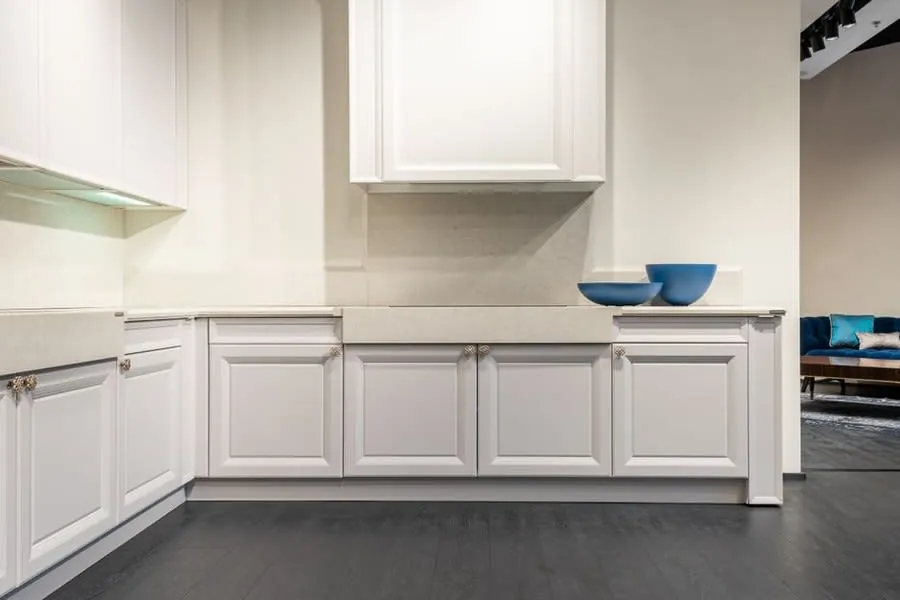
The honest case for supply and fit is not that it is cheaper. Sometimes it is, because of trade pricing, and sometimes it is not. The case is that one company carries every part of the outcome.
When the fitter ordered the units, a damaged door is their phone call and their problem. They chase it, they collect it, and they usually have a relationship with the depot that gets it moving faster than a member of the public on a service line. When the design was theirs, a unit that will not fit is their measuring error to correct at their cost. When the electrics, the plumbing and the tiling are all in one quote, nobody can point at anybody else, which is the single most exhausting part of running a kitchen project yourself.
There is a legal edge to it as well. Under section 49 of the Consumer Rights Act 2015, every service contract carries an implied term that the work is done with reasonable care and skill. That covers the fitting either way. What it does not cover is a product you chose and bought yourself that turns out to be wrong for the room. Bundle supply and fit into one contract and the line between a workmanship problem and a product problem stops being your argument to have.
The Trades Behind the Units Do Not Change

Whoever bought the kitchen, the regulated work is identical, and it is the part people forget to budget when they are focused on the price of the units.
New circuits, a new consumer unit, and altered wiring in a kitchen are notifiable work under Part P of the Building Regulations, which in practice means a registered electrician who self-certifies and issues you a certificate, or a building control application. Anything touching gas means a Gas Safe registered engineer, and moving a hob or a boiler is not a small job in a terrace where the run has to be re-routed around a chimney breast.
Two things follow from that. First, a labour only quote that does not name who is doing the electrics is incomplete, and you should ask before you compare it with anything. Second, keep the paperwork. When you sell, the buyer’s solicitor asks for electrical certification on recent kitchen work, and in Liverpool’s older stock - where a lot of houses have had two or three kitchens in thirty years - a missing certificate is a genuine hold-up at exchange.
Liverpool Houses Make Their Own Rules

Supply only assumes you have somewhere to put a kitchen for a fortnight, and a fair chunk of this city does not.
In the terraces around Kensington, Wavertree, Anfield and Bootle, a full kitchen arrives on a wagon that cannot get down the street, gets unloaded at the kerb, and has to live in the front room or the back yard until the fitter starts. Damp yards and cardboard flat pack are a poor combination, and chipboard carcasses that have sat in a wet yard for ten days will swell at the edges before they are ever assembled. In the 1930s semis out at Childwall, West Derby and Allerton there is usually a garage or a bigger hallway, which is why supply only tends to go more smoothly there. In a city centre or Baltic Triangle apartment, the constraints are a booked service lift, a loading bay window and a concierge who wants notice - none of which a national retailer’s delivery slot cares about.
Delivery dates are the other trap. Retailers deliver everything in one drop, whether or not the room is ready. Fitters usually want the units on site two or three days before they start, not two weeks. If you are supplying, ask your fitter for their preferred delivery window before you confirm anything with the supplier, and check whether they will accept the delivery at all if you are at work - many will not, because signing for a load they have not counted makes them the person who accepted the damage.
How to Compare the Two Quotes Fairly

Most people compare a supply and fit price against a units-only price and conclude the units-only route saves thousands. It does not, because two thirds of the work is missing from one side of the comparison.
Put both on the same sheet. On the supply only side, list the units and worktop including delivery, the joinery labour, the electrician, the plumber, the tiler, the plastering, the waste removal and skip, the appliances, and a contingency of around 10 per cent for reorders and the extra days that come with them. On the supply and fit side, list the single price and note carefully what is excluded - stone worktops, appliances, flooring, and making good are the usual four. Then compare the totals, not the headline.
Ask each fitter three questions and the picture usually settles itself. Who orders and checks the kitchen against the room? Who pays for a wrong or damaged item, and who waits for it? What happens to the price if the job runs an extra two days because of something behind the old units? A fitter who answers those clearly is worth more than a discount, whichever way you end up buying. If you are still weighing up scope before you get that far, the full kitchen renovation guide covers what a project involves end to end.
Frequently Asked Questions
How much does labour only kitchen fitting cost in Liverpool?
For a standard ten to twelve unit kitchen in Liverpool, the joinery labour alone - stripping out, assembling and hanging units, cutting and joining a laminate worktop, fitting doors and handles - usually runs £1,200 to £2,600. Once you add the electrician, the plumber, tiling and making good the plaster, a full labour package on the same kitchen is closer to £2,800 to £5,000. Stone worktops are templated and fitted by the stone supplier and priced separately again.
Is it cheaper to buy your own kitchen units and pay a fitter to install them?
Sometimes, but the saving is smaller than most people expect. A fitter buying through a trade account often lands units at a price close to the retail deal you were offered, and they absorb the cost of anything that arrives damaged or missing. If you buy the kitchen yourself, you keep the discount but you also keep every measuring error, delivery shortage and replacement order. On a straightforward like for like replacement it can work well. On a kitchen with a changed layout it rarely does.
Who is responsible if a kitchen I supplied myself does not fit?
You are, in almost every case. When you buy the units, the design and the measurements are your contract with the supplier, and the fitter is only being paid to install what turns up. Under the Consumer Rights Act 2015 your fitter still has to work with reasonable care and skill, so bad workmanship is on them, but a base unit that is 100mm too wide for the wall is not a workmanship problem. Getting the fitter to check the plan before you place the order removes most of that risk for the price of an hour of their time.
Do I still need certificates if I supply my own kitchen?
Yes. New or altered circuits, a new consumer unit and most rewiring in a kitchen are notifiable under Part P of the Building Regulations, and any gas work has to be done by a Gas Safe registered engineer, regardless of who bought the units. Ask for the electrical installation certificate and the gas paperwork at handover and keep them with your house documents - a buyer’s solicitor in Liverpool will ask for them when you sell.