
11 August 2026
How to Choose a Joiner in Liverpool: What to Check Before You Book
Picking a joiner is harder than picking almost any other trade, because the work is not comparable at a glance. Two quotes for the same alcove can be £1,400 apart and look identical on paper. In Liverpool the going rate for a joiner is around £280 a day plus materials, a bespoke job usually runs two to four weeks from survey to fitting, and a pair of alcove units lands somewhere between £2,000 and £3,800. Those figures only mean something once you know what sits behind them. This is the vetting guide: what to check before you hand over a deposit, what a proper quote looks like, and the specific things a good joiner will notice in a Victorian terrace where the walls are 20mm out of plumb and the floor drops away under the skirting.
Joiner, Carpenter or Cabinet Maker: What You Actually Need in Liverpool
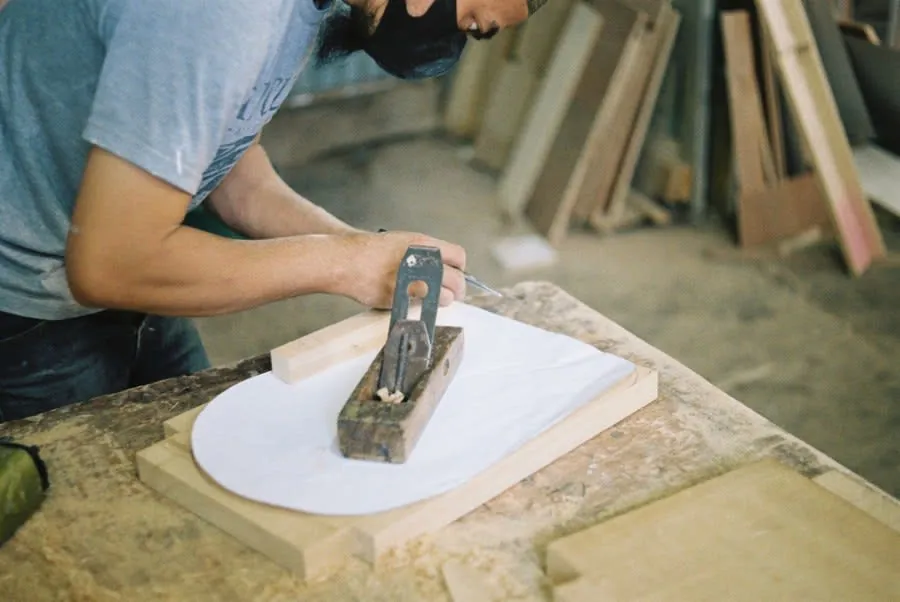
These three words get used interchangeably and they are not the same trade. Carpentry is the structural timber in a building: joists, stud walls, roof timbers, door linings, floorboards, first-fix work that a plasterer or a chippy’s mate will cover over. Joinery is the finer, fitted work built to furniture tolerances. Wardrobes, alcove units, panelling, staircases, window seats. A cabinet maker is further along the same road again, usually making freestanding pieces in a workshop with dovetails and veneers, not scribing anything to a wall.
The difference that matters to you is tolerance. A carpenter can be 5mm to 10mm out on a stud wall and nobody will ever know, because it disappears under plaster. A joiner cannot, because the 3mm gap between two doors is the finished product and your eye reads it every day. Someone who spends their week hanging fire doors on a site in Speke is a competent tradesperson who may still make a mess of a fitted wardrobe, and that is not an insult, it is just a different set of habits.
So when you ring round, ask the plain question: is fitted furniture your day job or your weekend job? Our custom joinery work is all the second sort, made to measure for a specific room, and the distinction is worth pushing on before you get three quotes that are pricing three different standards. If someone bristles at being asked, that is your answer.
What to Check Before You Book a Joiner in Liverpool: Insurance, References and Real Finished Work

Three things are actually checkable, and most people check none of them. First, public liability insurance. Ask for the certificate, not a verbal yes. £1 million is the floor and £2 million to £5 million is common. Read the dates, and read the name on it, because it needs to match the name on the quote and the name on the bank details. A certificate in a different trading name means somebody has some explaining to do.
Second, references with addresses. Not screenshots of five-star ratings, which anyone can collect, but two homes in your part of the city where they built the same thing you want. Older is better. Anyone can hand over a job finished last Tuesday. Ask for one from two or three years ago, because that is the one where the doors have had time to drop, the paint has had time to chip and the customer has had time to form a real opinion. Registration with a scheme such as TrustMark, the government-endorsed quality scheme, is a reasonable extra filter, though it is not a substitute for going to look.
Third, look at their photographs properly. Everything looks fine from across the room. Zoom in on the junction where the unit meets the wall and where it meets the skirting, because that scribe is where the skill lives. You want a tight, consistent line. A fat bead of caulk filling a wandering gap means the cut was wrong and the mastic gun is doing the joinery. Check the door gaps too: they should be the same top and bottom, on every door, in every photo. If the gallery is all wide shots and no close-ups, ask yourself why.
A few other things to keep an eye on. A mobile number and nothing else, with no business address anywhere on the website. Gallery photos that a reverse image search finds attached to a company in another county. A strong preference for cash and a shrug about invoices. Any one of those on its own might be nothing. Two together and I would keep ringing round.
Why a Site Visit and a Measured Survey Are Non-Negotiable
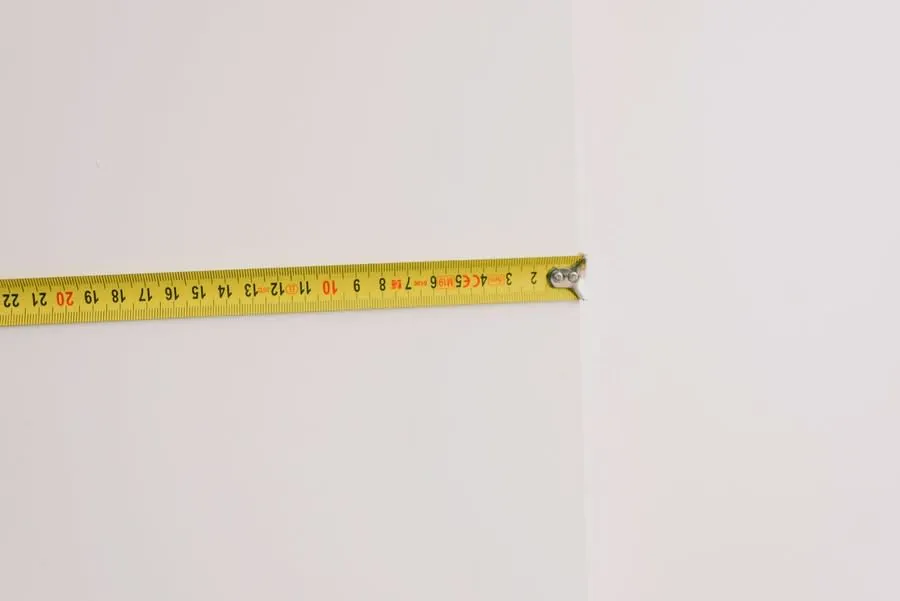
Anyone who prices bespoke joinery from photographs on WhatsApp is guessing. They may be guessing from experience, which is better than nothing, but it is still a guess, and guesses get corrected on fitting day in a direction that never favours you. A measured survey for a wall of bespoke fitted wardrobes or a run of shelving should take thirty to sixty minutes, and if someone is in and out in ten, they have measured the width and nothing else.
What a real survey looks like: the opening measured at three heights, not one, because a Victorian wall is rarely the same width at the skirting as it is at the picture rail. A long level held against the wall to find how far out of plumb it runs. A level on the floor to find the fall. Studs and joists located so fixings go into something. Pipes and cables traced before anything gets drilled near a chimney breast. Skirting depth noted, because a 200mm Victorian skirting with a moulded top needs a completely different scribe from a 100mm modern one. Ceiling height taken at both ends.
Those numbers change the build, not just the price. In a typical Liverpool terrace the walls can be 15mm to 30mm off plumb over a wall height, the floor can drop 15mm to 25mm across a 3m run, and the chimney breast often projects further at the bottom than the top. A carcass built square to those measurements needs packing, scribing and a face frame that absorbs the error. A carcass built to a phone call needs filler strips down the sides. You can see which one you got from the doorway.
Reading a Joinery Quote: What a Good One Itemises

A bad quote is one line. “Supply and fit fitted wardrobes to master bedroom, £4,200.” That tells you nothing, it cannot be compared with anything, and every argument you have later starts from the fact that nobody wrote down what was included.
A good one names things. Board type and thickness, so 18mm moisture-resistant MDF rather than just MDF. Hinge and runner brand, because Blum, Hettich and Grass are the ones you can still buy spares for in ten years, and unbranded soft-close is the first thing a cheap quote quietly downgrades. Finish spelled out: sprayed or brush-applied, the sheen, the paint system, the colour reference. Number of fitting days on site. Payment stages with figures. And, just as importantly, exclusions: electrics, decorating, making good the plaster, removing your old furniture, waste disposal. Those are the four that reappear as extras.
Get three quotes and read them side by side rather than glancing at the totals. Be suspicious of the cheapest when it is vague about the interior, because that is nearly always where the money has come out. Be suspicious of the dearest if the number moves when you hesitate, since a price that drops by 40 percent on the doorstep was never a price. Our breakdown of what fitted wardrobes cost in Liverpool itemises a wall line by line if you want a worked example to hold the quotes up against. Put a vague one next to an itemised one and it stops looking cheap.
Materials: MDF, Moisture-Resistant MDF, Plywood and Solid Timber

There is no single best material, and a joiner who tells you there is has one supplier and one habit. For painted fitted furniture, moisture-resistant MDF is the honest answer most of the time. It is flat, it is stable, it machines cleanly, the edges take paint without furring up, and 18mm is the standard for carcasses and doors. Standard MDF is perfectly fine for shelving and internals in a dry room, and cheaper, so there is nothing wrong with a quote that specifies both in different places. That is a joiner thinking, not cutting corners.
Birch plywood earns its money where strength matters: drawer boxes, long shelf spans, anything holding books, records or a heavy television. It also holds a screw far better than MDF if something needs to come apart one day. Solid timber belongs in worktops, window-seat tops, face frames and open shelving where you want visible grain, and it belongs nowhere near a wide painted panel, because timber moves with the seasons and a painted joint will crack open within a couple of winters. Melamine-faced chipboard is the budget carcass. It is tough and it comes off the board finished, but a chipped edge cannot be repaired, only replaced, and you can never repaint it.
The tell of a good joiner is a drawing that specifies different materials in different places rather than one board for everything. Ask them to justify each one. When we build custom cabinets the spec usually mixes MR MDF carcasses, ply drawer boxes and a solid timber top, and every part of that is written on the drawing before anything is ordered. If all you get back is the word MDF, you have been told about a budget, not a build.
Finish Quality: Sprayed, Hand-Painted or Melamine, and What Sprayed Should Actually Mean

“Sprayed” is the most abused word in this trade. Done properly it means the doors and drawer fronts go to a workshop, get the edges sealed and sanded, get primer, get denibbed between coats, then take two or three topcoats in a controlled space and cure flat on racks before anyone puts them in a van. That is what gives you the hard, even surface people are picturing when they compare bespoke work with factory kitchen doors. Done improperly it means a man with a gun and a dust sheet in your bedroom on a damp Thursday, and you can feel the difference with your hand.
Hand-painting is not the poor relation. It is the right method for the parts that cannot go to a workshop: scribes, fixed panels, face frames, cornice, anything fitted tight against a wall that is not straight. On a period job in a terrace, a brush-finished shaker door next to original skirting and a picture rail reads better than a glass-flat sprayed one. Most decent jobs use both, which is why a quote should say which parts get which. Melamine is the third option and it is an honest one for a rental, a child’s bedroom or a garage: cheap, tough, zero drying time, and no chance of ever changing the colour.
One local point that catches people out. On the coastal side, out around Crosby, Waterloo and Formby, and in any room with a cold north-facing external wall, site-applied paint cures slowly. A finish applied in an unheated room in February can stay soft for weeks and pick up marks from the first coat hanger that touches it. If a joiner tells you the doors are being sprayed off site and delivered cured, that is not an upsell, it is the right call. The same logic applies to anything with a lot of visible flat surface, like the panels on a media wall.
Deposits, Payment Stages and Your Consumer Rights

A deposit is normal. Bespoke joinery means the joiner buys sheet materials, hardware and paint specifically for you, and none of it can be sold on if you change your mind. Ten to twenty five percent on order is the usual ask and it is reasonable. A third gets a polite question about why. Half up front on a small job, or anything approaching the full amount before work starts, is where you stop and think about it properly. A sensible structure is deposit on order, an interim stage when materials are bought or the carcasses are built, and the balance after fitting and after you have walked the job and listed the snags.
Pay in a way that leaves a trail. Card or bank transfer against a numbered invoice, with the business name on it. Cash with no paperwork saves nobody anything except the person who might later deny the job happened. Keep the drawing, the quote and every message, because they are the description your work has to match.
Your legal position is stronger than most people realise. Under the Consumer Rights Act 2015, a service has to be carried out with reasonable care and skill, and goods supplied have to be of satisfactory quality and match how they were described. If they are not, you can require the work to be put right, and if that fails you can ask for a price reduction.
There is a second protection hardly anyone hears about. A contract you sign at your own kitchen table counts as an off-premises sale, which normally gives you 14 days to cancel unless you have agreed in writing that the work should begin sooner. Citizens Advice consumer help sets out how to use both if a job goes wrong. None of this is aggressive and none of it should offend anyone. A joiner who gets prickly about you knowing your rights has just told you something useful for free.
Liverpool Specifics: Period Property Quirks, Lead Times and When to Book a Joiner
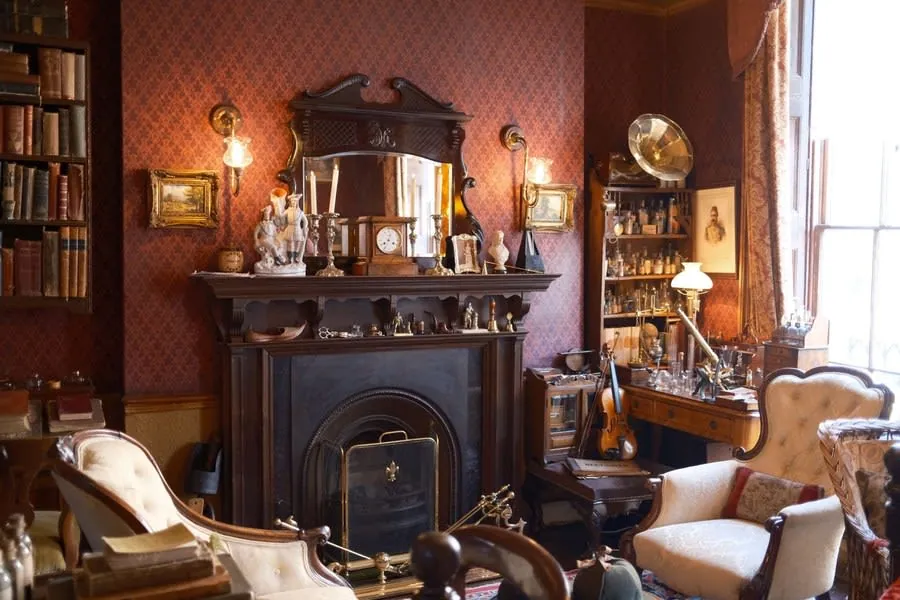
Ask a candidate what they expect to find in your kind of house. The answer separates people fast. In the Victorian terraces of Wavertree, Anfield, Kensington, Toxteth and the Dingle, a joiner should already be assuming plaster on lath, which blows away from the timber if you drive a fixing into it carelessly, so fixings go into studs and battens or onto a batten frame rather than the wall face. They should expect a chimney breast projecting 300mm to 350mm, alcoves that differ from each other by 20mm to 40mm, and a floor that has been settling since the 1890s. None of that is a problem. Not allowing for it is.
The 1930s semis around Childwall, Allerton, Mossley Hill and West Derby bring different quirks: bay fronts that eat the wall you wanted to use, picture rails and deep skirtings to scribe around, and back bedrooms that are squarer and easier than anything in a terrace. Baltic Triangle and dockside conversions are the opposite problem. The walls are usually plumb and the ceilings level, which sounds easy, but fixings into metal stud or a concrete soffit need planning, and some leases restrict what you can drill into at all. A fitted alcove unit in a terrace and the same piece in a converted warehouse are two different builds.
On timing, two to four weeks from survey to fitting is the normal run. The drawing takes the first few days, materials and spraying take most of the middle, and fitting is usually one to three days in your home. Bigger projects run longer, especially anything with electrics in it. Autumn is the pinch point, so if you want joinery finished before Christmas, book the survey by early October. Same goes if the joinery is tied to other work: if a new kitchen installation is happening in the same house, the two schedules need to be talked about at the survey rather than discovered in week three.
Frequently Asked Questions
How do I choose a joiner in Liverpool?
Start with the three things that are checkable: a public liability certificate with the same name on it as the quote, two addresses in your part of the city where they have built the same kind of thing, and a measured survey before any price is written down. Then read the quote. A joiner who names the board type, the hinge brand, the finish and the number of fitting days is telling you what you are buying. One that says supply and fit fitted wardrobes, £4,200, is not.
What is the difference between a joiner and a carpenter?
Carpentry is the structural timber in a building: joists, stud walls, roof timbers, door linings, floors. Joinery is the fitted work built to furniture tolerances, so wardrobes, alcove units, panelling and staircases. A carpenter can be a few millimetres out and nobody will ever know, because the plasterer covers it. A joiner cannot, because the gap between two doors is the finished article. Hire for the tolerance the job needs.
How much deposit should I pay a joiner in Liverpool?
Ten to twenty five percent on order is normal and covers the sheet materials, hardware and paint the joiner has to buy before starting. Anything past a third before a single board is cut deserves a straight question about why. Never pay the full amount before the fitting is finished and you have walked the job. Pay by card or bank transfer against an invoice so there is a record.
How far in advance should I book a joiner in Liverpool?
Two to four weeks from survey to fitting is the normal run for a bespoke job, with the drawing in the first few days, materials and spraying in the middle, and one to three days of fitting in your house. Autumn is the busy stretch. If you want work finished before Christmas, get the survey booked by early October, because the workshop queue is what sets the date, not the fitting.