
31 August 2026
How Long Does A Fitted Kitchen Last? Repair, Refresh Or Replace In Liverpool
Somewhere between the fifteenth and twentieth year, most fitted kitchens cross a line - not from working to broken, but from “still fine” to “on the list”. The awkward part is that a kitchen is not one thing. It is boxes, doors, hinges, runners, a worktop and a seal around a sink, and each of those ages on its own clock. Some of what looks like a dying kitchen is £40 of hardware; some of what looks cosmetic is the start of a carcass failing. Around Liverpool, where a huge share of kitchens sit in the cool back rooms of pre-war terraces, the ageing runs a little differently again. This guide sets out honest lifespans for each part, what gives up first, and how to tell a kitchen that needs a repair from one that has genuinely finished its innings.
The Honest Lifespan Numbers, Part By Part
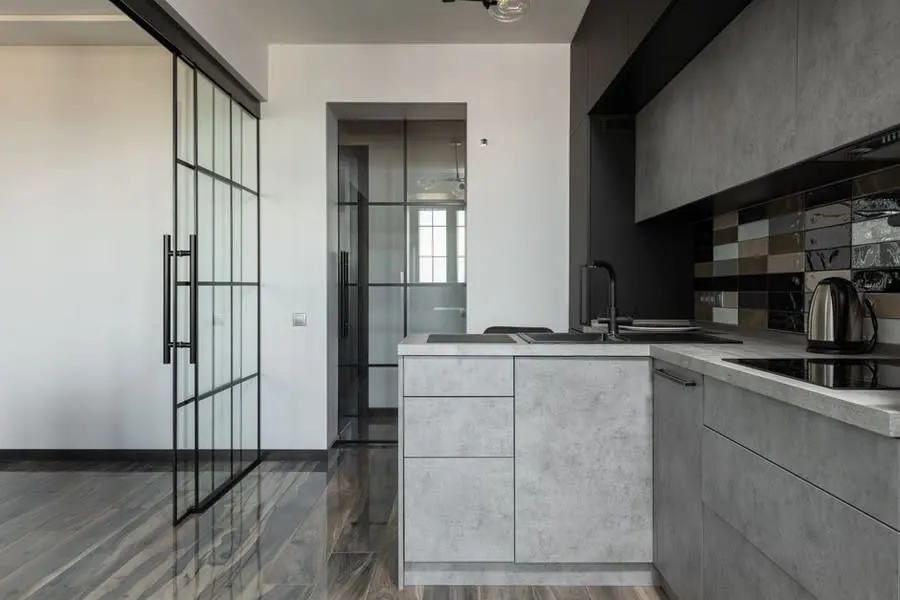
Treat 15 to 20 years as the working life of a mid-range fitted kitchen, then break it down. Carcasses - the boxes everything hangs on - are the long-lived part and will pass 20 years easily if they stay dry, which is why proper kitchen installation matters more than any brochure spec: a unit fitted level, sealed and clear of damp has a completely different life to the same unit thrown in badly. Doors and their finishes manage 10 to 15 years before edges chip and colours tire, foil-wrapped doors at the shorter end. Laminate worktops give 10 to 15 years depending on how they are treated around the sink; quartz and granite will outlast the rest of the kitchen entirely.
The short straw goes to the moving parts. Budget hinges and runners can be sloppy within five years of heavy use, while the better brands test their hardware to around 200,000 open-and-close cycles - decades of normal cooking. Consumer research from Which? on fitted kitchens keeps landing on the same point: build quality and hardware separate kitchens far more than the style of the doors ever does.
What Wears Out First - And It Is Rarely The Boxes
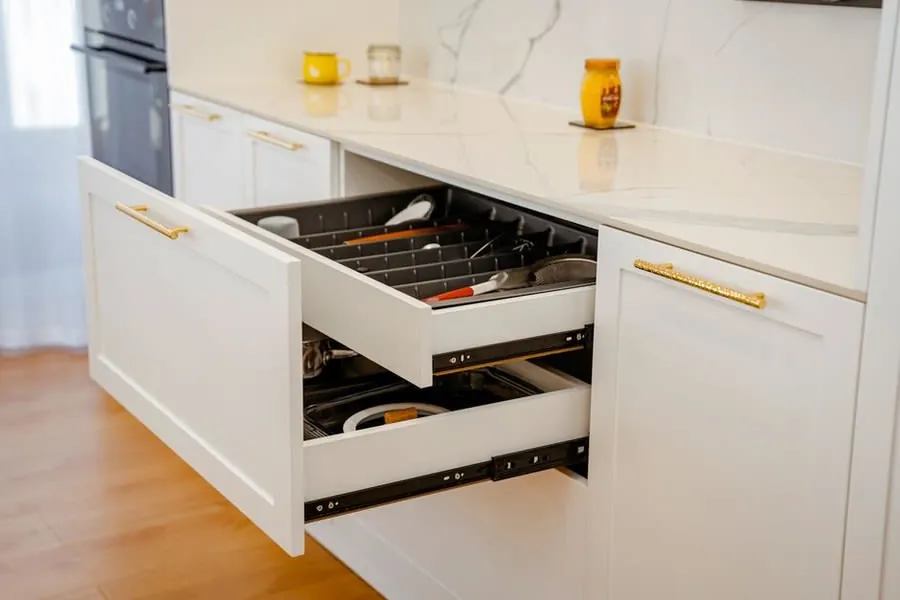
There is a predictable order to kitchen decline. First come the hinges: doors start to droop, catch on neighbours, and need re-adjusting more often until the screw holes themselves give up. Drawer runners follow, especially on the drawer nearest the kettle - the one opened forty times a day - which starts to grind, stick or sag under its load of cutlery.
Next is edging. The thin banding on door and panel edges peels at the corners, usually near the kettle or dishwasher where steam hits it daily. Once an edge lifts, moisture gets behind it and the peeling accelerates. Around the same time, the sealant lines around the worktop and upstands discolour and crack, which is cosmetic right up until the moment it is not, because failed sealant is how water reaches chipboard.
Notice what is missing from that list: the carcasses. A kitchen at year twelve almost always has tired hardware and edges on structurally sound boxes. That mismatch is exactly why so many kitchens get replaced years before they need to be - the parts you see fail first, and the parts that matter fail last.
Water Is What Actually Kills Kitchens

If a kitchen dies before its time, the cause is nearly always water, and the scene of the crime is nearly always the sink base. Chipboard is fine material while it is dry and hopeless once it is soaked: it swells, loses its grip on screws and never shrinks back. A slow drip from a waste trap, a splashed cut-out that was never sealed, a dishwasher hose weeping into the void behind the plinth - any of these can quietly destroy a base unit over a couple of winters while the rest of the kitchen looks immaculate.
The checks take five minutes twice a year. Empty the sink cupboard, run your hand around the base for softness or that tell-tale swollen ridge along the front edge. Pull the plinth off and look for staining on the floor under the dishwasher and washing machine. Press the sealant line around the sink - it should be rubbery and attached, not brittle and gapping.
Caught early, water damage is one unit and an hour of a fitter’s time. Caught late, it has usually spread along the run, and that is the difference between a £150 repair and a new kitchen brought forward five years.
How Liverpool Homes Age A Kitchen

Liverpool’s kitchens skew old-house. A big share of them sit in the rear rooms of solid-wall Victorian and Edwardian terraces - and solid brick holds cold in a way modern insulated cavity walls do not. A cool room plus daily cooking equals condensation, and condensation is low-level water damage on a schedule: it beads on cold end panels, creeps into edging, and keeps the air inside cupboards on outside walls damp for months at a stretch. In a terrace back kitchen with no working extractor, doors and panels can look ten years old at six.
Ventilation is the counter, and it is not optional in the regulations either - Approved Document F sets minimum extract rates for kitchens precisely because cooking moisture has to go somewhere. An extractor that actually ducts outside, used every time something boils, removes most of the problem at source. Trickle vents and leaving the back window cracked after cooking handle the rest.
The flip side: a kitchen in a warm, well-ventilated Liverpool extension ages no faster than anywhere else in the country. It is the cold-room-plus-steam combination that costs years, not the postcode.
Repairs That Buy Years For Not Much
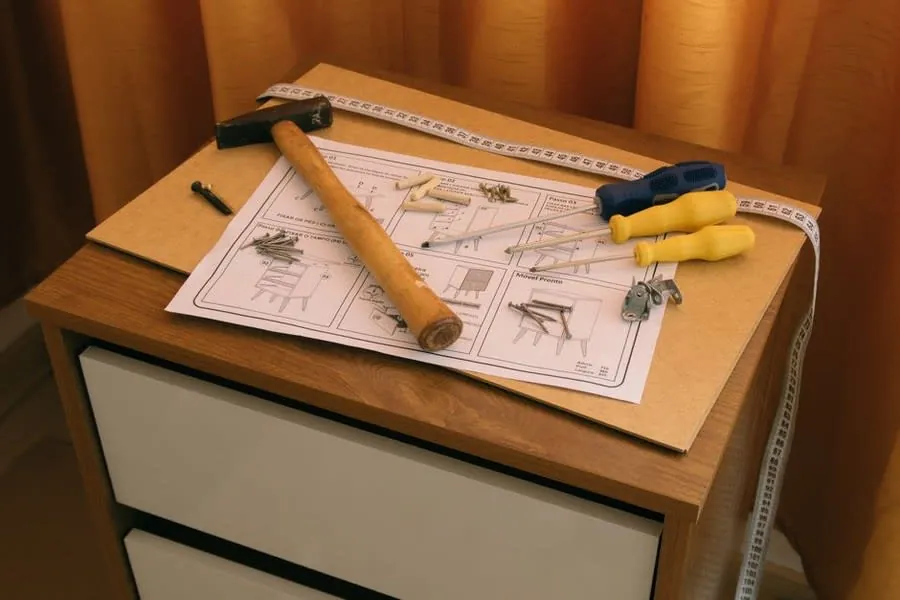
Before pricing a new kitchen, price a Saturday of maintenance, because the gap is startling. Standard-pattern hinges cost a few pounds each and most doors take them with no new drilling; soft-close versions are a small step up and make a fifteen-year-old kitchen feel oddly new. Drawer runners are similarly cheap and sort out the drawers that get hammered daily. Stripped hinge holes in the carcass repair with a dowel and glue in minutes.
A step up from hardware: re-sealing the worktop joints and sink cut-out, re-gluing or replacing lifted edging with iron-on banding, and swapping a single water-damaged carcass - usually the sink base - while keeping its original door. A competent fitter can do the lot in a day, and the kitchen comes out feeling years younger.
The honest limit on all this is matching. If your doors were discontinued a decade ago, one damaged door can be the thing that forces a bigger decision - which is where a full door swap comes in, and we have covered when replacement doors beat a whole new kitchen in its own guide. The rule stays the same throughout: spend freely on a dry kitchen, spend nothing on a wet one.
The Signs A Kitchen Is Genuinely Finished
Some kitchens should not be rescued, and the signs are fairly unambiguous. Swollen or soft carcasses at more than one point - not just the sink base but under the draining board, beside the dishwasher - mean the structure is going, and new doors on failing boxes is money on a lost cause. Shelves that bow under normal crockery, backs that have parted company with the boxes, and wall units pulling away from a wall all say the same thing.
The other kind of finished is functional. If the layout fights you daily - no landing space beside the oven, a fridge in the wrong room, one usable worktop run for a family of five - then keeping the units alive is preserving a problem. The same goes when the refit wish-list involves moving appliances or knocking through, because at that point the old units would not survive the building work anyway.
There is also plain arithmetic. When the repair list reaches a third or more of a new kitchen’s cost, and the doors cannot be matched, patching stops being thrift and becomes deferral. Independent advice from Citizens Advice on getting home improvements done is a sensible read at that point, before anyone signs anything.
Speccing The Next One To Go Past Twenty Years
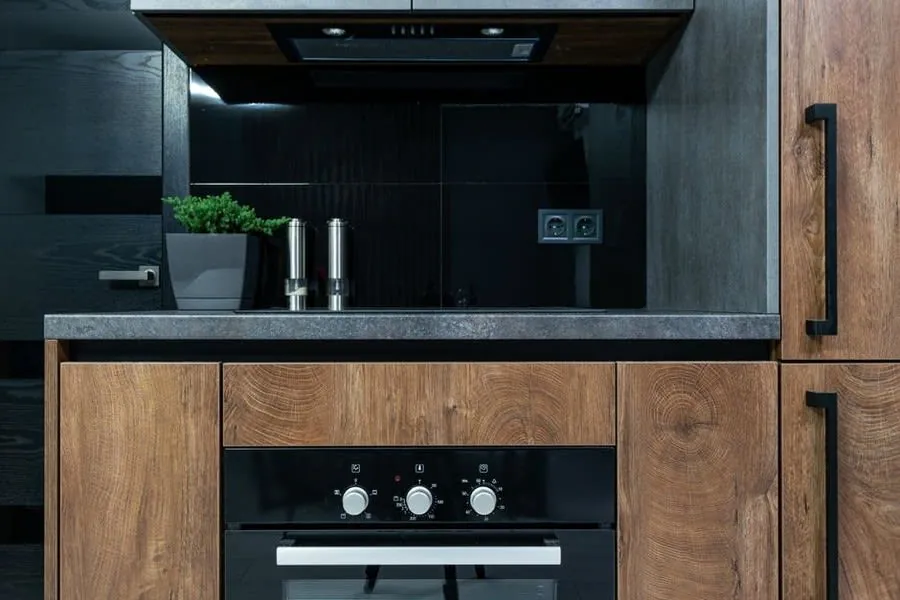
If the verdict is replacement, the decisions that decide the next kitchen’s lifespan are mostly invisible in the showroom. Ask for 18mm rigid-built carcasses rather than 15mm flat-pack, and put the budget into hinges and runners from the brands that publish cycle ratings - it is the least glamorous money in the whole project and the best spent. Have the sink cut-out properly sealed on the day it is cut, not caulked as an afterthought, and fit an extractor that ducts outside rather than recirculating.
Style-wise, longevity favours the unfashionable choice: simple door shapes and colours that were never trendy do not date, whereas this year’s statement finish has a visible sell-by date. Timeless and repairable beats striking and discontinued.
Based on the kitchens we are asked to look at across Liverpool, the ones that reach twenty years share boring virtues - decent boxes, branded hardware, sealed properly, ventilated properly, small leaks fixed fast. None of it costs much at the point of fitting. All of it is expensive to wish you had done.
Frequently Asked Questions
What is the average lifespan of a fitted kitchen?
Around 15 to 20 years for a decently made and decently fitted kitchen, though the parts age at different speeds. Hinges and drawer runners are usually the first to complain, door finishes and laminate edging follow, and the carcasses themselves - the boxes behind the doors - will outlive everything else as long as they stay dry. Plenty of Liverpool kitchens from the early 2000s are structurally fine and simply look their age.
Is it worth repairing a 15 year old kitchen?
Often, yes. If the carcasses are dry and square, new hinges, runners and re-sealing cost very little and buy real time. The maths stops working when water has got into the chipboard - a swollen sink base or blown panels under the draining board do not recover, and money spent around them is money spent on a kitchen that is already failing. Dry kitchen, repair away; wet kitchen, start pricing a replacement.
How can I make a new kitchen last longer?
Three things do most of the work. Specify 18mm rigid-built carcasses and branded hinges and runners, because hardware is where cheap kitchens save money and where they fail first. Keep water out - a properly sealed sink cut-out, upstands, and fixing small leaks the week they appear rather than the year after. And run the extractor every time you cook, because steam that does not leave the room ends up condensing on and inside the units.
Do Liverpool homes wear kitchens out faster?
The houses themselves can, slightly. A lot of the city’s stock is solid-wall Victorian and Edwardian terraces, and their back kitchens run cooler and damper than a modern insulated room, so condensation works on doors, end panels and edging all winter. It is not dramatic, but over fifteen years a kitchen in a poorly ventilated terrace back room ages visibly faster than the same kitchen in a warm extension. Good extraction and a bit of background ventilation close most of that gap.
Get an honest opinion on your Liverpool kitchen - repair or replace