
15 September 2026
Handleless Kitchens in Liverpool: J-Pull, True Handleless and What the Difference Costs
Handleless has quietly become the default request on Liverpool kitchen enquiries that involve anything built after about 1990, and it is spreading into the terraces too. Roughly a quarter of the designs we are asked to price now come back with a handleless front of some kind, which was closer to one in ten five years ago. The problem is that “handleless” describes three completely different construction methods with three completely different prices, and showroom staff rarely separate them. One of them can cost you nothing at all over a standard door. One will add several hundred pounds to a twelve unit kitchen. One introduces a moving mechanical part behind every door in the room. In a city where the average back kitchen in a byelaw terrace is somewhere between 2.4m and 3m wide, the choice also has a practical dimension that has nothing to do with looks. Here is what each route is, what it adds to the bill, and where each one falls over.
The Three Ways to Get a Handleless Kitchen
Strip away the marketing and there are three mechanisms, not a spectrum.
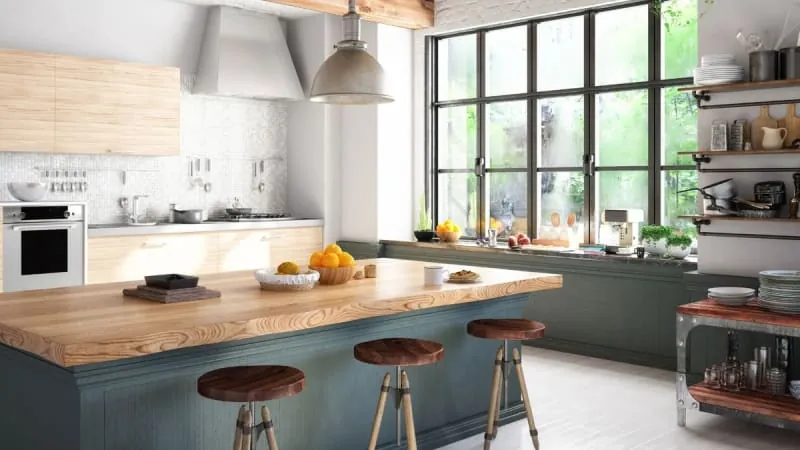
The first is the J-pull, sometimes sold as a J-profile or integrated handle door. The door itself is machined with a lipped edge along the top, so your fingers hook into the door rather than into anything bolted onto it. Nothing extra is fitted. The second is true handleless, where an aluminium rail is fixed to the carcass and the door front sits forward of it, leaving a shadow gap you reach into. The third is push-to-open, where the front is completely flat and a latch behind it releases when you press. Those can be mechanical or electric, and the difference between the two is measured in thousands.
You can mix them, and most good designs do. A combination that works well across the kitchen installations we fit in Liverpool is a true rail on the base run where you want the clean horizontal line at eye level, with J-pull on the tall units and wall cupboards where nobody is looking closely. The cost sits somewhere sensible and the room still reads as handleless.
J-Pull Doors: The Version That Costs Almost Nothing
J-pull is the one most people should be looking at first, and it is the one least often pushed, because there is no additional product to sell.
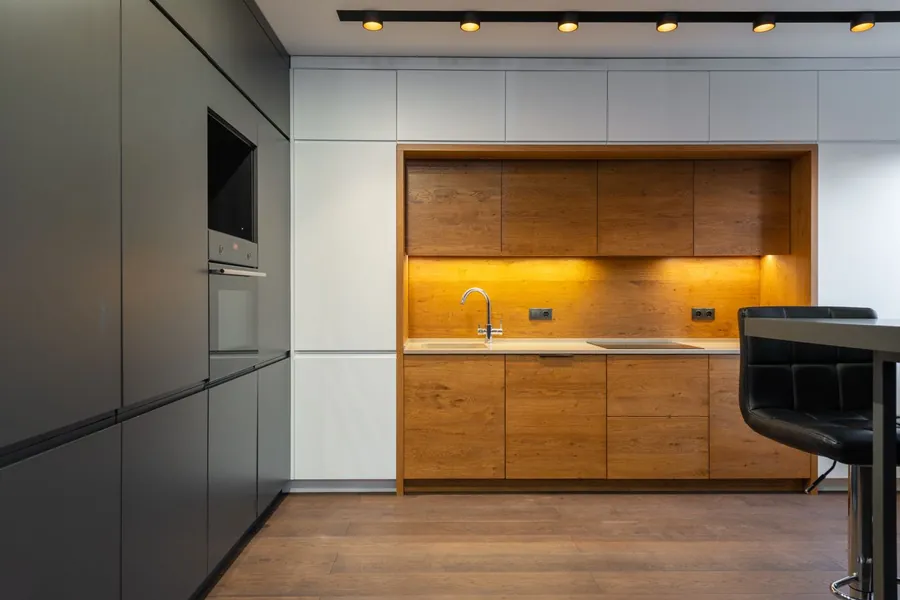
Within the same door range, a J-pull front usually prices within a few percent of the flat slab equivalent. Then you knock off the handles. A decent brushed steel bar handle runs £6 to £14, and a fifteen unit kitchen has somewhere between eighteen and twenty-four of them once you count drawer fronts, so you are removing £120 to £300 of ironmongery from the order. In practice a J-pull kitchen often comes in level with a handled one, sometimes marginally under.
The fitting is no harder either. There is no rail to set out, no extra drilling, no alignment reference beyond the doors themselves. If your budget is fixed and you want the look without a fight, this is where it ends.
What J-Pull Gives Up
The lip is on the top edge only, which means base units open from above and wall units open from below, and the visual rhythm is not quite the same continuous line you get from a proper rail. On a gloss finish the lip also catches light differently to the face, so on a long run you sometimes see a subtle stripe. Most people never notice. If you are the sort who will, look at the real thing under showroom lighting before committing.
True Handleless: The Rail, and Where the Money Goes
True handleless is the version in the magazine photographs, and it is genuinely a different build.
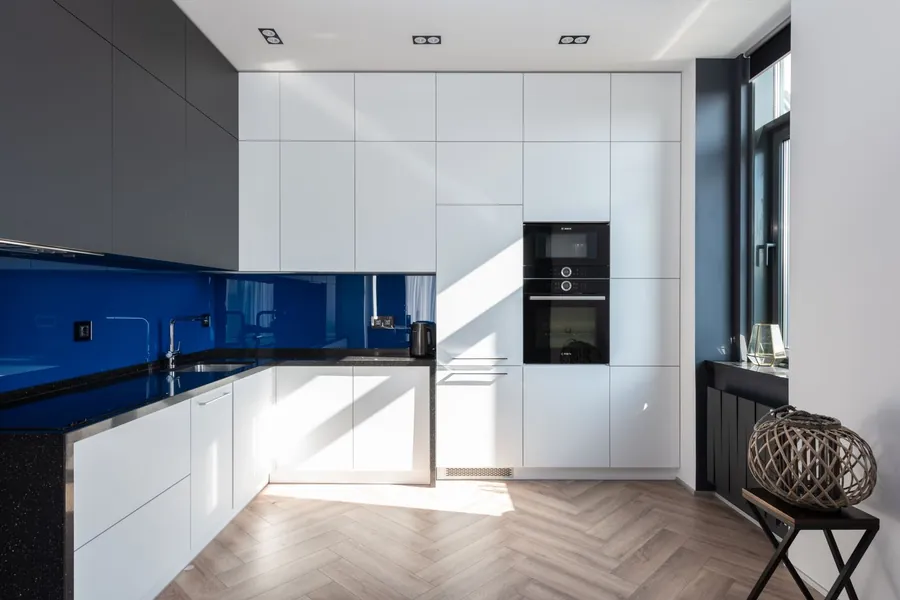
An aluminium C-profile or L-profile is fixed to the carcass, running horizontally between the worktop and the top drawer, and again between drawer lines. The fronts stand proud of it by roughly 20mm, and that gap is your handle. Aluminium rail is sold by the metre and typically lands at £15 to £35 per metre depending on finish, with end caps and brackets on top. A standard Liverpool kitchen with three or four metres of base run plus a tall bank needs more rail than people expect once you account for every cut and every return.
Then there is labour. The rail is a straight reference line running the length of the kitchen, and it has to be dead level, because any error in it is visible along its whole length in a way a handle never would be. Add the fact that drawer boxes often need to be a size down to clear the rail, and you are looking at roughly £400 to £900 extra on a twelve to fifteen unit kitchen against the same kitchen with handles. That is the honest number, and anyone quoting handleless as a free upgrade is either selling you J-pull under a different name or has not costed the fitting hours at all.
Push-to-Open: The One With a Mechanism in It
Push-to-open gives the flattest, quietest front of the three, and it is the only one that introduces something that can break.
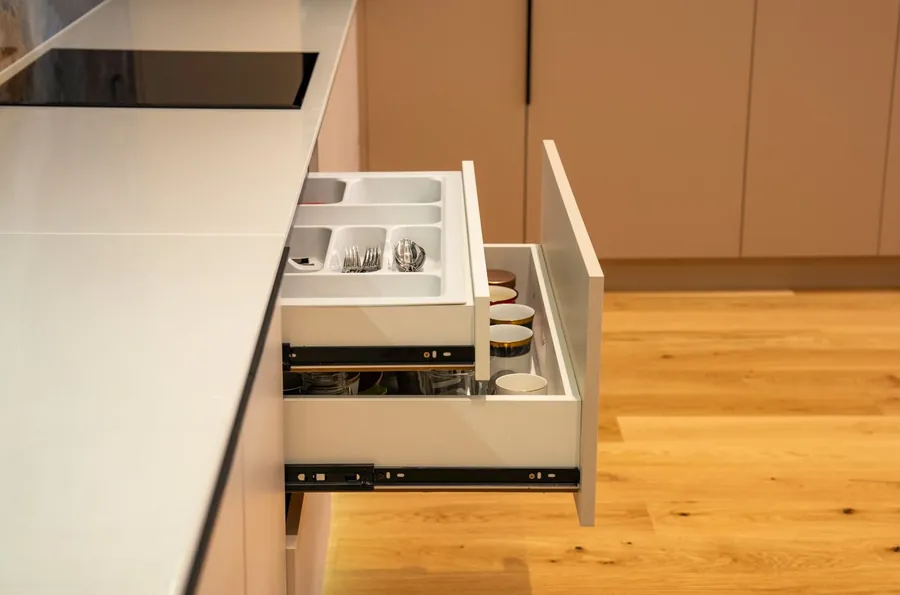
Mechanical latches are the common version. A sprung catch sits behind the front, you press, it releases. They cost a few pounds each and typically add £150 to £350 across a full kitchen. The electric route is a different animal: a servo unit per drawer, a transformer, and a permanent supply. Budget from £1,200 upwards for a partial run and considerably more for a whole kitchen. That supply also has to be wired properly, because a fused spur in a kitchen falls under the electrical safety requirements of the building regulations - the government’s Approved Document P guidance on electrical safety in dwellings covers what is notifiable and who can sign it off, and it is not a job for the kitchen fitter unless they hold the qualification.
The failures are predictable. Heavy drawers kill mechanical latches fastest, so the pan drawer and the bin drawer go first, and they announce it by sitting a couple of millimetres proud rather than by refusing to open. That is a cheap part and a ten minute fix. The electric version does not wear, but when it goes it takes a group of drawers with it. And with either type, a dog leaning on a base unit or a child using a drawer front to steady themselves will open it, every time.
Which One Actually Suits a Narrow Liverpool Kitchen
This is where the decision stops being about style.
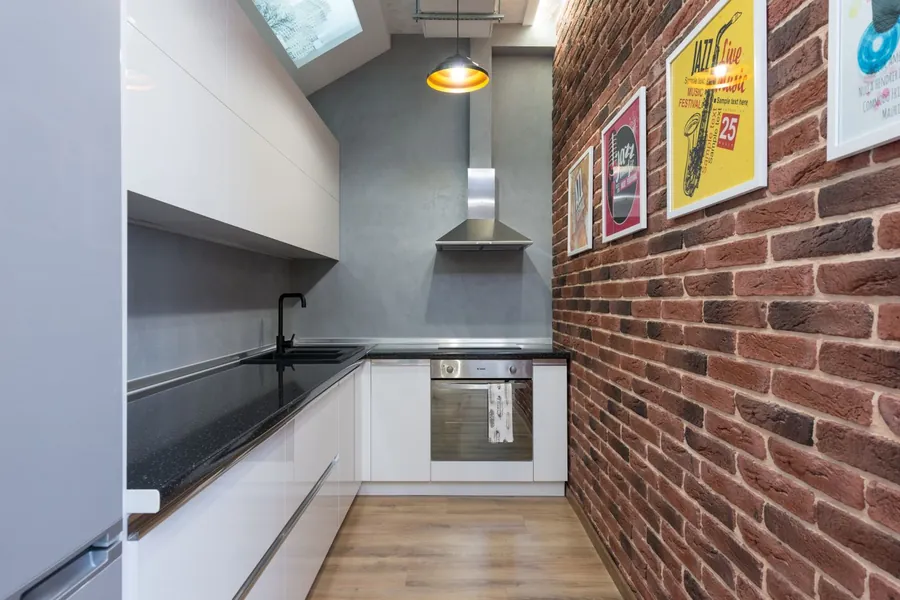
Liverpool’s byelaw terraces across Wavertree, Anfield, Kensington, Old Swan and Toxteth almost all put the kitchen in the rear addition, and those rooms are narrow by design. A D-bar handle projects 30mm to 40mm. In a galley with 900mm between the run and the opposite wall, two facing sets of handles take nearly 80mm out of the only walkway in the room, and they catch jeans pockets, tea towels and the handles of whatever you are carrying. Removing the projection is a genuine gain in those houses, not a cosmetic one.
For those kitchens, J-pull on everything is usually the answer. It gives the full benefit of nothing sticking out, costs nothing meaningful, and does not add a mechanism. In wider rooms - the 1930s semis around Allerton, Childwall and Mossley Hill, or a knocked-through open plan space - a true rail on the base run earns its money, because you can actually stand far enough back to see the line it creates. If you are weighing up whether to reface what you have rather than start again, our piece on replacement kitchen doors against a full new kitchen sets out where that line usually falls.
Living With It: Fingerprints, Wet Hands and Two Millimetres
Every handleless kitchen has the same three complaints after a year, and none of them are dealbreakers if you know before you buy.
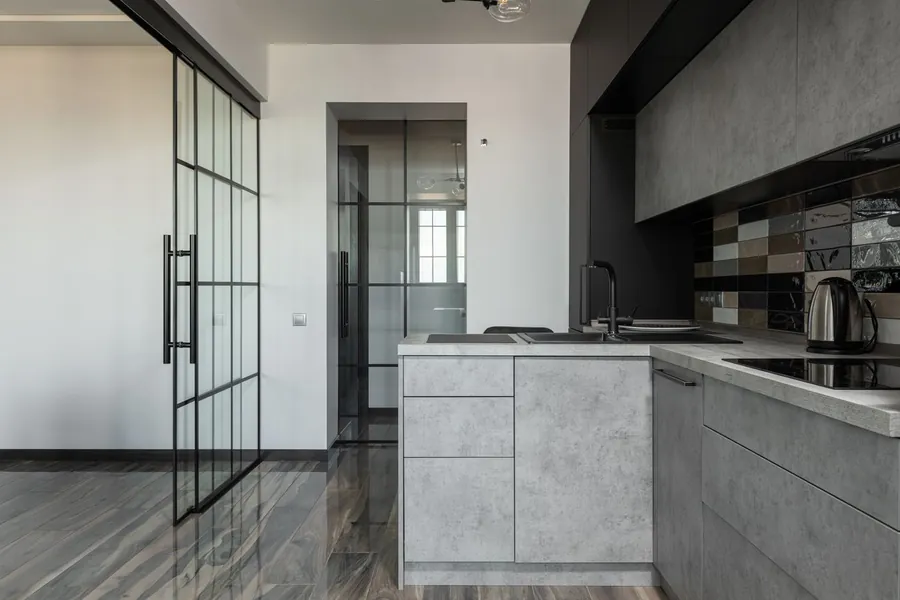
Fingerprints are first. With a handle, you touch the handle. Without one, you touch the door, in the same spot, several times a day, with whatever is on your hands. On high gloss that shows within hours. Matt lacquered and anti-fingerprint finishes are dramatically better and cost a little more, and if you are choosing between a gloss and a matt in the same price bracket for a family kitchen, take the matt. Which?’s independent fitted kitchen reviews are worth reading on door finishes before you take a showroom’s word for durability.
Wet hands are second, and only really apply to push-to-open. There is nothing to hook a finger under, so you press with a knuckle or a forearm, which works but takes a fortnight to become automatic. J-pull and true handleless both keep a lip to grab, so this is not a universal handleless problem.
Third is alignment, and it is the one that separates fitters. A handleless run creates a continuous horizontal line across the room, and the human eye reads a 2mm variation in that line instantly. The same 2mm on a handled kitchen is invisible. It means every carcass has to be packed and levelled properly on floors that are rarely flat, and in a Victorian terrace with 140 years of settlement that is real work. It is also why handleless in a house with damp or movement history should be fitted after everything else has settled, not before.
What to Ask a Fitter Before You Commit
A short list will tell you quickly whether the quote in front of you is serious.
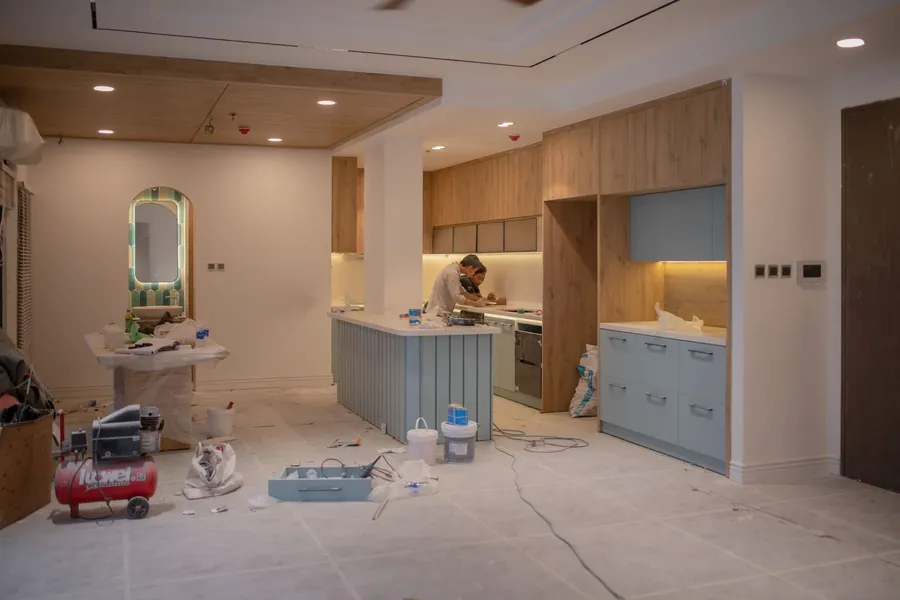
Ask which of the three systems the price covers, by name, and get it written on the quote. “Handleless” on its own is not a specification. Ask whether rail, end caps and brackets are included as separate lines or buried in a unit price, because the second is where surprises live. Ask what the drawer box internal height becomes once the rail is in, since on a true handleless top drawer you often lose 20mm to 30mm and that is the drawer you use most.
Ask how they intend to level the run and what they will do about the floor if it falls away, which in Liverpool’s older stock it usually does. Ask for the make of the push-to-open hardware if you are having any, and whether soft-close and push-to-open are compatible on that particular range, because on some systems they are not without a specific variant. And check the firm itself - TrustMark, the government-endorsed quality scheme for tradespeople, is a reasonable starting point for verifying who you are dealing with.
Get all of that answered and the decision is straightforward. J-pull if the budget matters or the room is narrow, a true rail if you have the space to appreciate it and the budget to do it properly, push-to-open only where you have thought about what happens when a latch wears. If you want it priced all three ways on your own kitchen so you can see the gap for yourself, get a free quote from our Liverpool team and we will set it out line by line.
Frequently Asked Questions
Is a handleless kitchen more expensive than one with handles?
It depends entirely on which of the three routes you take. A J-pull door is usually within a few percent of the same range’s slab door, and because you buy no handles at all it can land level or slightly under. A true handleless rail is the one that costs real money: on a twelve to fifteen unit Liverpool kitchen expect roughly £400 to £900 on top once the aluminium, the end caps, the brackets and the extra fitting hours are counted. Push-to-open sits in between, from about £150 for mechanical latches across a kitchen up to several thousand for an electric servo system.
Does handleless work in a narrow Liverpool terrace kitchen?
It works better than handles do. In a back kitchen of 2.4m to 3m wide, a protruding D-bar takes 30mm to 40mm out of a walkway that was already tight, and it catches hips, bags and pockets every time you pass. J-pull removes that projection completely and costs almost nothing to specify, which is why it is the version we fit most often in the city’s terraces. A true handleless rail on base units only, with J-pull above, is the other combination that works well in a narrow room.
Do push-to-open drawers stop working?
Mechanical push latches do wear, and the ones that fail early are almost always the heavy ones - the pan drawer, the deep bin drawer, anything carrying 20kg or more. A worn latch shows itself by sitting slightly proud rather than by refusing to open, and a fresh Tip-On unit is a few pounds and a ten minute swap. Electric systems fail differently: they do not wear out, but if the transformer or the fused spur goes, several fronts stop opening at once until it is fixed.
Can you convert an existing kitchen to handleless without replacing everything?
Partly. If the carcasses are sound and square you can order replacement J-pull doors and drawer fronts and keep everything behind them, which is the cheapest way into the look. A true handleless rail is harder to retrofit, because the rail fixes to the carcass and the door heights have to be recut to allow for the gap it occupies, so you are usually buying new fronts and new drawer boxes anyway. Push-to-open latches can be added to existing doors as long as there is clearance behind the front for the catch to travel.