
22 August 2026
What Are Kitchen Units Made Of? Chipboard, MDF and Plywood in Liverpool Kitchens
Almost every kitchen conversation starts with doors and worktops, and almost every kitchen problem starts somewhere else. The boxes behind the doors - the carcasses - are what actually hold your worktop up, keep your wall units on the wall and decide whether a leak under the sink is a wipe-up or a rebuild. They are also the part of the quote nobody explains, described as “18mm units” if you are lucky and not described at all if you are not. Given that a fitted kitchen is likely the second biggest thing you will buy for a Liverpool house after the house itself, and that the same room routinely sees humidity swing from 40% to 80% in the ten minutes it takes to boil a pan, it is worth knowing what the boxes are made from. Here is the honest version, without the showroom language.
The Carcass Is the Bit Nobody Shows You
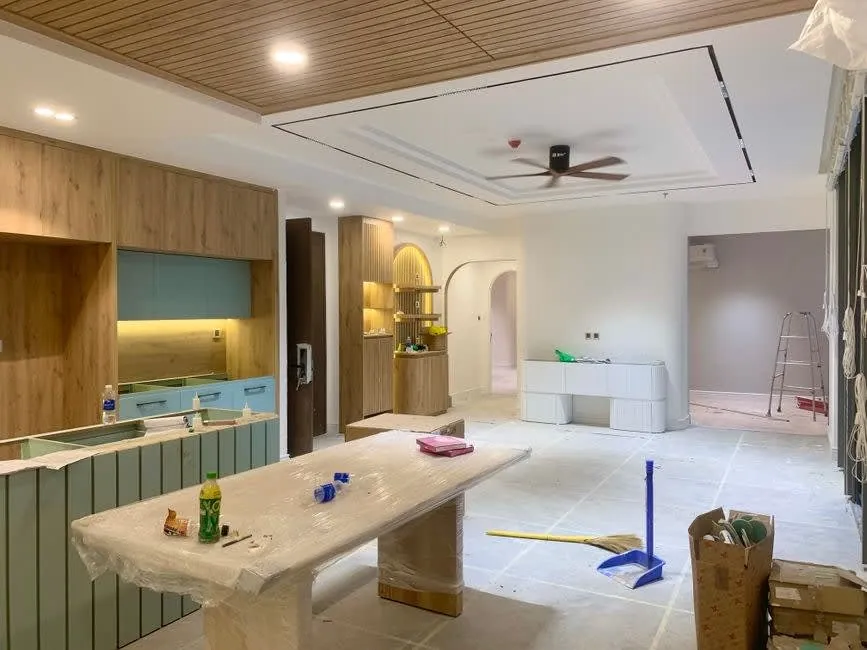
A carcass is the box: two sides, a back, usually a bottom, a rail or two at the top, and shelves. Doors and drawer fronts hang off it. Worktops sit on it. Everything you can see is cosmetic, and everything you cannot see is structural, which is precisely why the structural half is where corners get cut.
Three things separate a good carcass from a poor one, and none of them are visible once the doors are on. Thickness comes first: 18mm panels are meaningfully stiffer than 15mm, hold cam fixings and hinge plates better, and sag less across a 1000mm base unit carrying a stone worktop. Second is how it is joined - a unit assembled with dowels and glue as well as cams is a rigid box, while a cam-only flatpack relies on the thin hardboard back to stop it racking. Third is the back panel itself: a 3mm hardboard sheet pinned into a rebate is a different object from a 6mm or 8mm panel grooved into the sides.
For anyone specifying a kitchen, the standard worth knowing is BS EN 14749, which covers safety and strength requirements for domestic and kitchen storage furniture. The Wood Panel Industries Federation’s list of panel standards and codes of practice is the plainest place to see how the various board and furniture standards fit together. If a supplier cannot tell you which standard their units are built to, that is information in itself.
Chipboard and MFC: The Default, and Usually Fine
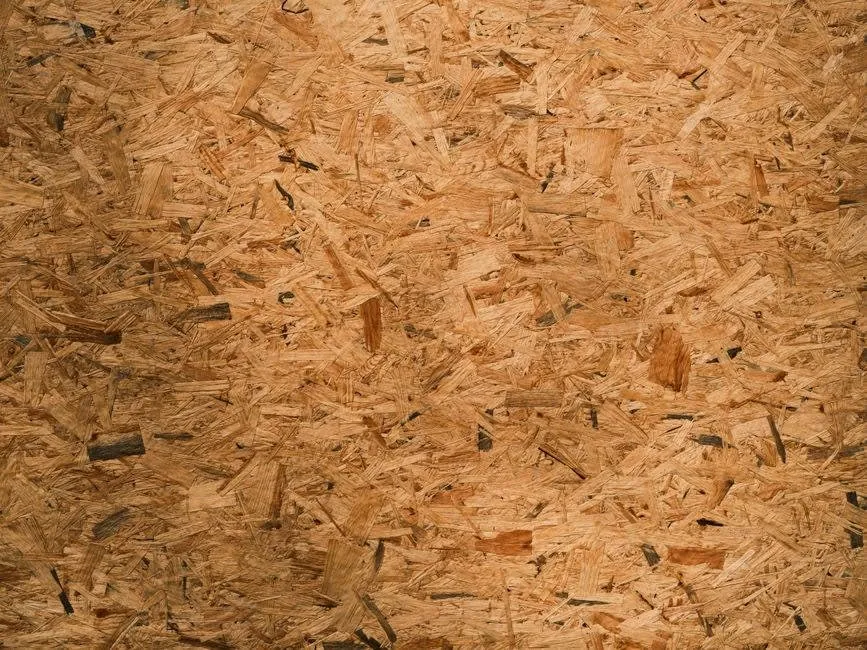
Melamine faced chipboard - MFC - is what the great majority of UK kitchen carcasses are made from, and the snobbery about it is mostly misplaced. Particleboard is wood chips bonded with resin and pressed into a flat, dimensionally stable panel, then faced with a melamine paper that gives it colour and a wipeable surface. It is cheap, it is consistent, it does not warp the way solid timber does, and it takes a machined edge cleanly. A well-built 18mm MFC kitchen, kept dry, will do twenty years without complaint.
The grades matter more than the material. Under BS EN 312, particleboard runs from P1 upward, and the two you care about are P2, intended for interior fitments in dry conditions, and P3, which is specified for non-load-bearing use in humid conditions. P3 is what people mean when they say “moisture-resistant chipboard”. The industry PanelGuide sets out what each grade is and is not built to survive, and the short version is that P3 slows the swelling rather than preventing it.
Where MFC genuinely loses is water and repair. Once a panel has taken on water it swells irreversibly - the compressed chips expand and never go back - so a damaged unit gets replaced, not repaired. And melamine faced board cannot be scribed and rebuilt on site the way timber can, so in a room full of bowed walls the fitter is filling gaps rather than fitting to them.
MDF: Where It Earns Its Place

MDF is a different animal from chipboard, though people lump them together. It is wood broken down to individual fibres rather than chips, then bonded and pressed, which gives it a dense, uniform core with no grain and no voids. That uniformity is the whole point: MDF machines to a crisp profile, takes paint beautifully with no grain telegraphing through, and does not move seasonally the way timber does.
Which is why it dominates doors rather than carcasses. Almost every painted shaker kitchen in Liverpool has MDF doors, and almost every vinyl-wrapped door is MDF underneath. A five-piece painted shaker door in MDF will stay flat and keep its paint film intact through years of steam in a way a solid timber door, which expands and contracts across its width, will not. If your painted doors have hairline cracks at the joints, that is timber moving. MDF does not do that.
It is used for carcasses occasionally, mostly in bespoke work where the whole box is being sprayed to match. It is heavier than chipboard, holds a screw better in the face but worse in the edge, and moisture-resistant MDF - usually dyed green so you can see it - is the version to ask for anywhere near water. The one real caution is dust: cutting MDF produces very fine dust that needs proper extraction and a mask, which is a workshop concern rather than yours, but it is a reason bespoke MDF work costs what it does.
Plywood: The Upgrade, and What It Costs

Plywood is thin veneers of real wood glued in alternating grain directions, and that cross-banding is what makes it behave. It is stiffer per millimetre than chipboard, it holds screws in the edge rather than crumbling around them, and when it does get wet it tends to recover rather than swell permanently. Birch ply in particular has a tight, void-free core that looks good enough to leave exposed, which is why so many contemporary kitchens show the edge as a feature rather than hiding it.
The catch is cost and weight. Ply carcasses generally add somewhere in the region of 30 to 60 percent to the carcass element of a kitchen, and since carcasses are only part of the total, the effect on the whole job is smaller than that sounds - but it is real. The panels are heavier to handle, which shows up in fitting time.
Where it earns its keep in Liverpool is the housing stock. A Victorian terrace in Wavertree or a 1930s semi in Allerton is rarely square, rarely level, and frequently has a chimney breast doing something inconvenient in the corner of the kitchen. Plywood can be cut, scribed, packed and rebuilt on site to fit what is actually there. That is a joinery approach rather than a flatpack one, and it is the same logic behind bespoke custom cabinets built around an alcove instead of a stock unit shoved into it with a filler strip.
Solid Timber, and Why It Is Almost Never a Carcass
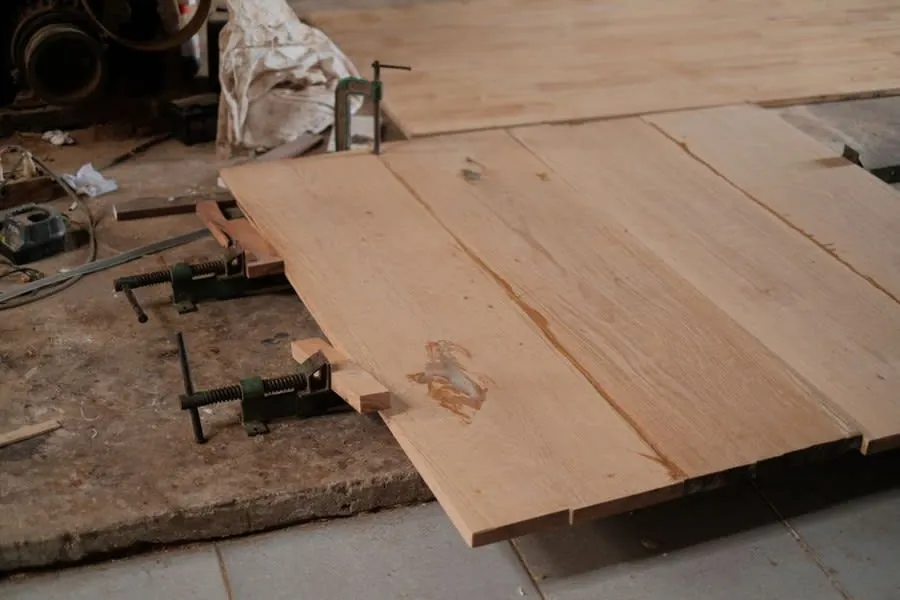
Every so often a showroom sells a “solid wood kitchen” and the buyer assumes the boxes are oak. They almost never are. Solid timber moves - it takes on and gives up moisture with the air around it, expanding across the grain and barely at all along it - and a kitchen is one of the most humidity-volatile rooms in the house. Build a 600mm wide cabinet side from solid oak and it will try to change width with the seasons, which puts every joint and fixing under load.
What “solid wood kitchen” usually means is solid timber doors and frames, on an engineered board carcass. That is not a con, it is good practice. Timber is used where its movement can be accommodated by frame-and-panel construction, and stable engineered board is used where movement would be a problem. A well-made frame-and-panel oak door has a floating centre panel precisely so the panel can move without splitting the frame.
Timber does have a genuine place inside a kitchen, though: drawer boxes. A dovetailed solid beech or oak drawer box running on quality runners is one of the nicest upgrades you can buy, and it is the part of the kitchen your hands touch every day. If there is spare budget after the carcasses are sorted, put it there before you put it into a fancier door colour.
Water Is the Real Enemy, Especially in a Liverpool Kitchen
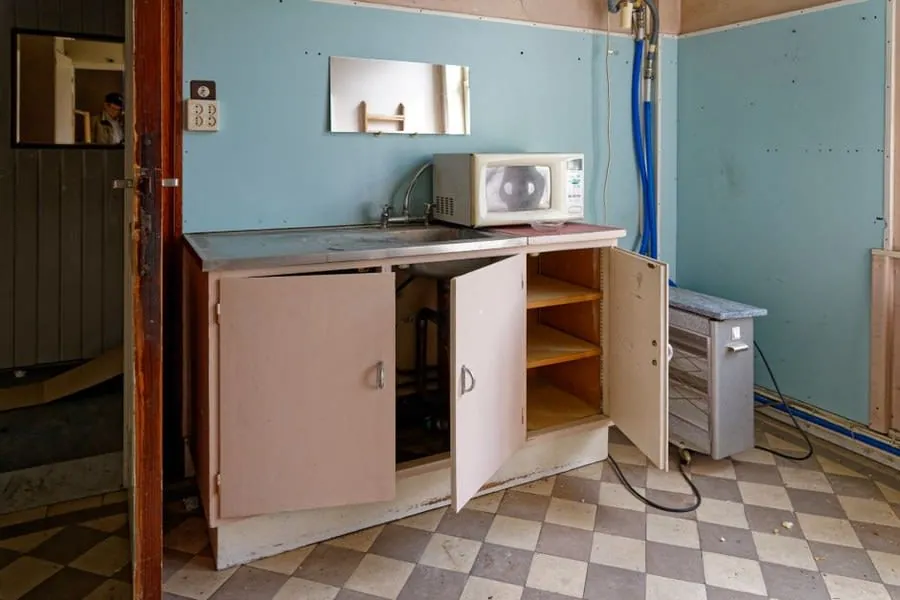
Practically every carcass failure we are called out to is water, and it arrives from three places. A slow drip from a waste trap or an isolating valve, sitting in the base of the sink unit unnoticed for weeks. Steam and condensation, which is a bigger factor here than people credit given Liverpool’s damp maritime climate and the number of solid-wall terraces where a north-facing kitchen wall stays cold all winter. And the worktop cut-out around the sink and hob, which is the single most common route for water into a panel edge.
Two habits deal with most of it. First, seal the cut-outs properly - the exposed particleboard edge of a laminate worktop where the sink drops in should be sealed and the joint siliconed, and it takes ten minutes at the time and costs several hundred pounds if skipped. Second, ventilate. Extract to outside rather than recirculating, and run it while you cook, not after. The England guidance in Approved Document F on ventilation sets intermittent kitchen extract at 30 litres per second where the fan is over the hob, or 60 litres per second elsewhere in the room - useful numbers when you are choosing a hood, because plenty of decorative cooker hoods do not reach them.
Specify moisture-resistant board on the sink and dishwasher run whatever the rest of the kitchen is made from. It is a small uplift on two or three units and it converts a leak from a replacement into an inconvenience. The same thinking applies to the worktop above it - our guide to worktop materials that hold up in Liverpool homes goes into which surfaces actually cope with standing water.
Doors, Carcasses, and Where a Liverpool Kitchen Budget Should Go
Here is the split that catches people out. Doors are replaceable, carcasses are not. Swapping every door and handle in a fitted kitchen is a weekend and a fraction of the cost of a new kitchen. Replacing the carcasses means pulling the worktop, the sink, the appliances and often the flooring, which is a full refit whether you wanted one or not. Yet the showroom conversation spends an hour on door colours and thirty seconds on what is behind them.
Spend accordingly. If the budget is tight, take a plainer door in a standard colour and put the difference into 18mm carcasses, moisture-resistant board on the wet run, decent soft-close hinges and good drawer runners. In five years you can change the doors for a few hundred pounds and have what looks like a new kitchen on boxes that are still sound. Do it the other way round and you have handsome doors hanging on units that are quietly sagging.
When you read a quote, four questions get you most of the way. What thickness are the carcasses, and are they 15mm or 18mm? Are they moisture-resistant board anywhere, and if so where? Are the units rigid-built with dowels and glue, or flatpack assembled on site? And what is the back panel - thin hardboard, or a substantial grooved-in panel? A supplier who answers all four without hesitating is telling you something useful about the rest of the job as well.
Frequently Asked Questions
What are most kitchen units made from?
The overwhelming majority of kitchen carcasses sold in the UK are melamine faced chipboard, usually 15mm or 18mm thick. The chipboard core gives the panel its stiffness and the melamine facing gives it a wipeable surface and its colour. Doors are more varied - typically MDF for painted and vinyl-wrapped styles, and solid timber or timber frames with an MDF panel at the higher end.
Is 18mm chipboard better than 15mm for kitchen cabinets?
Yes, noticeably. An 18mm carcass is stiffer across the span of a wide base unit, holds screws and cam fixings far better, and sags less under a heavy worktop or a shelf full of tins. The difference between a 15mm and an 18mm kitchen is usually a small percentage of the total cost and is one of the few upgrades you can feel a decade later.
Does moisture-resistant chipboard actually work?
It resists moisture, it is not waterproof. Moisture-resistant particleboard is made with a different resin that slows swelling when the panel gets damp, which buys you time to spot and fix a leak. Leave a dripping waste trap running into it for a fortnight and it will still fail. It is worth specifying for the sink and dishwasher run in any kitchen, and it is no substitute for sealing the worktop cut-outs properly.
Are plywood kitchen carcasses worth the extra cost?
In the right house, yes. Birch plywood is stiffer than chipboard, holds fixings much better, tolerates a wetting far more gracefully and can be cut and rebuilt around awkward walls, which matters in older Liverpool terraces where nothing is square. Expect to pay somewhere in the region of 30 to 60 percent more for the carcasses. If you are staying put for fifteen years or working around a chimney breast and sloping floor, it earns the money.